Rio de Janeiro
“Tall and tan and young and lovely
The girl from Ipanema goes walking
And when she passes
Each one she passes goes ‘ah’”
When my boyfriend Dave and I were brainstorming February vacation destinations, one of the primary requirements was "somewhere warm”. While I have enjoyed my share of snowy getaways over the years, escaping the polar vortex Toronto was experiencing seemed like a brilliant idea. And where better to get warm than South America? Our first stop was Rio de Janeiro, largely motivated by our desire to experience Carnival.
Rio Carnival
For those unfamiliar, Carnival is the annual festival leading up to Lent for Roman Catholics. It’s celebrated around the world, and Rio is known for throwing the largest Carnival party. Large community groups (samba schools) compete in the Sambadrome, featuring dance, drumming, and elaborate floats. In addition, blocos, organized street parties, are held throughout the city (the timing, location, and size of which are tracked on a handy app).
We had two very different Carnival experiences. Our first real taste of Carnival was on the Friday night, a couple days after we arrived. It was a relatively small bloco, perhaps 200-300 people. But what it lacked in size, it made up for in energy! They closed off one of the streets and set up a stage, which had a drumming performance and eventually a pop singer and her two hiphop back-up dancers. There were vendors around the perimeter selling drinks and snacks—we were amused to purchase beer from some enterprising kids who’d set up a cart (don’t worry, they had credit card service available!). We later made friends with an American who was happily sharing his tequila with all the new friends he was making. It was a fantastic night of music and dancing in the rain.
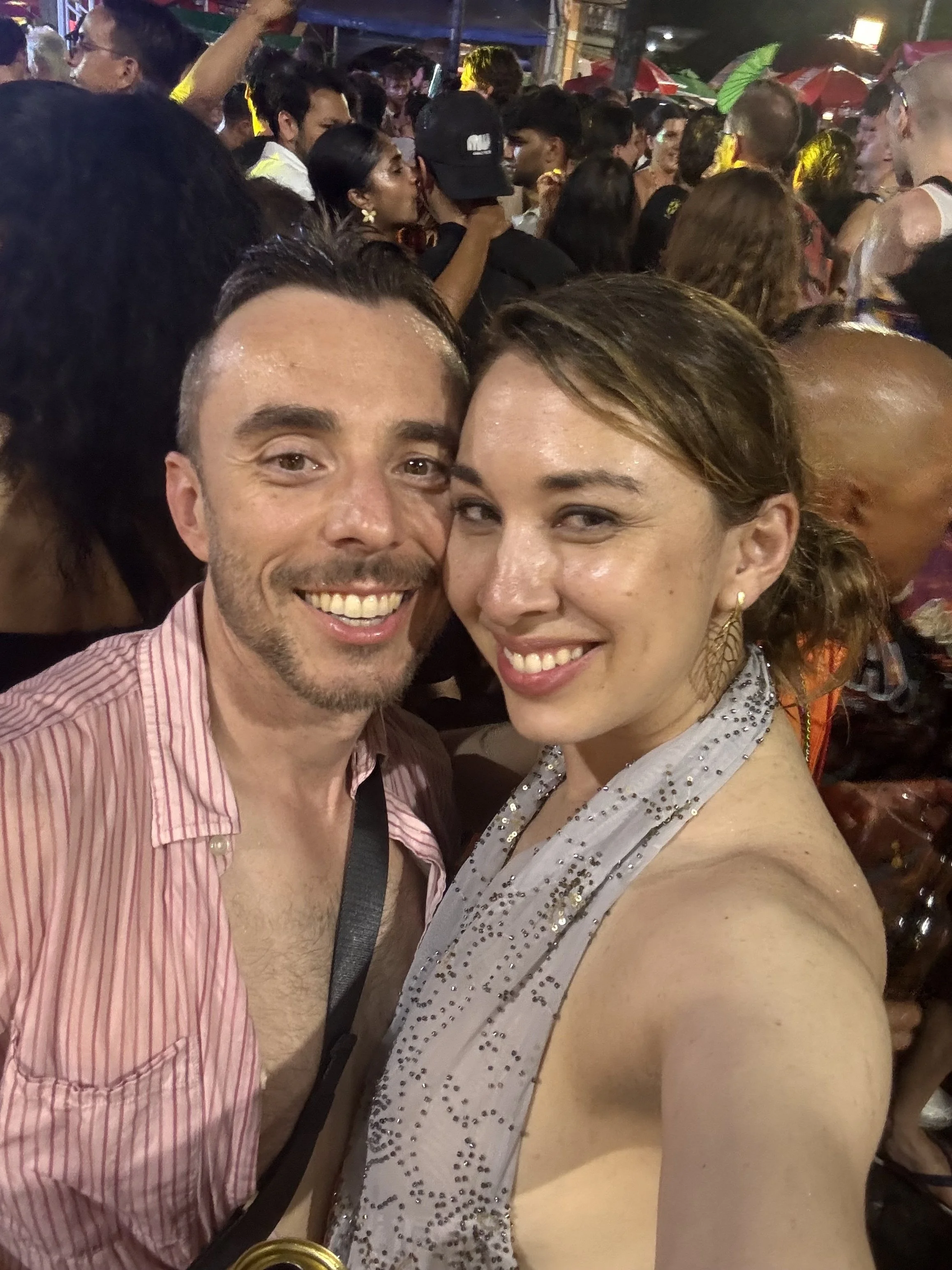
The next morning, we had our second Carnival experience. This was the final “megabloco” of Rio Carnival, which according to the listing for the event was estimating 100K people would attend. We arrived relatively late to the event (late night + morning bloco ≠ success), so it was already in full swing. It reminded me a lot of a Pride parade—outlandish costumes, uninhibited dancing, and lively music. As we moved into the crowd, it quickly became a very uncomfortable crush of people. We shuffled along for a time before it finally opened up into a small park area.
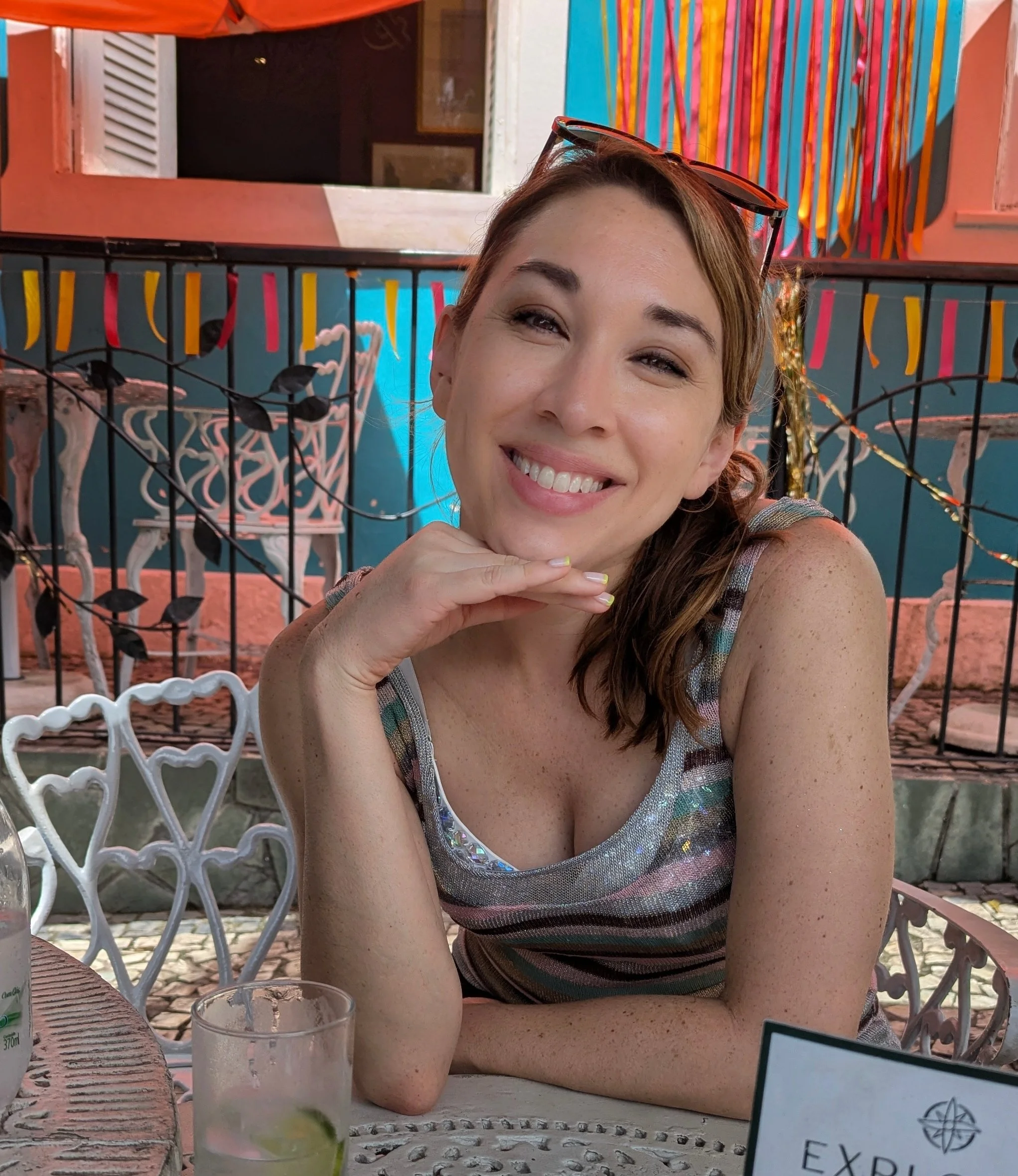
taken shortly after being pickpocketed—I believe instead of “cheese!”, it was “phone free!”
To our dismay, when we looked down at Dave’s crossbody bag, the zipper was partially open. And, lo and behold, despite all our vigilance and preparation, we still managed to get pickpocketed—namely my iPhone. Dave, in re-telling this story, which we have now done countless times, talks about how he felt someone really getting into his personal space, rubbing right up against him (perhaps too distract his attention?). And despite actually holding onto the bag while we moved through the crowd, someone still somehow snuck the zipper open just enough to slip out my phone (I would later track it using Find My Phone to somewhere an hour or so outside the city). Mercifully, Dave’s phone and wallet were still there. All of this happened within the first 15 minutes upon our arrival. It was certainly impressive, if nothing else. Needless to say, that put a bit of a damper on our enjoyment of the event, and we ultimately didn’t stay much longer after that.
The Beaches (Ipanema & Copacabana)
Our AirBnB was located in the Ipanema neighbourhood, just 5 minutes from the beach. It was probably the nicest neighbourhood we visited during our relatively brief time in Rio. Leafy, tree-lined streets, plentiful shops, restaurants, and bakeries—we spent much of our time trying out different pastry joints and gelato shops. Fun fact about Brazil: it has the largest population of Italians outside of Italy (a whopping 30 million people!), so the city was awash with Italian treats.
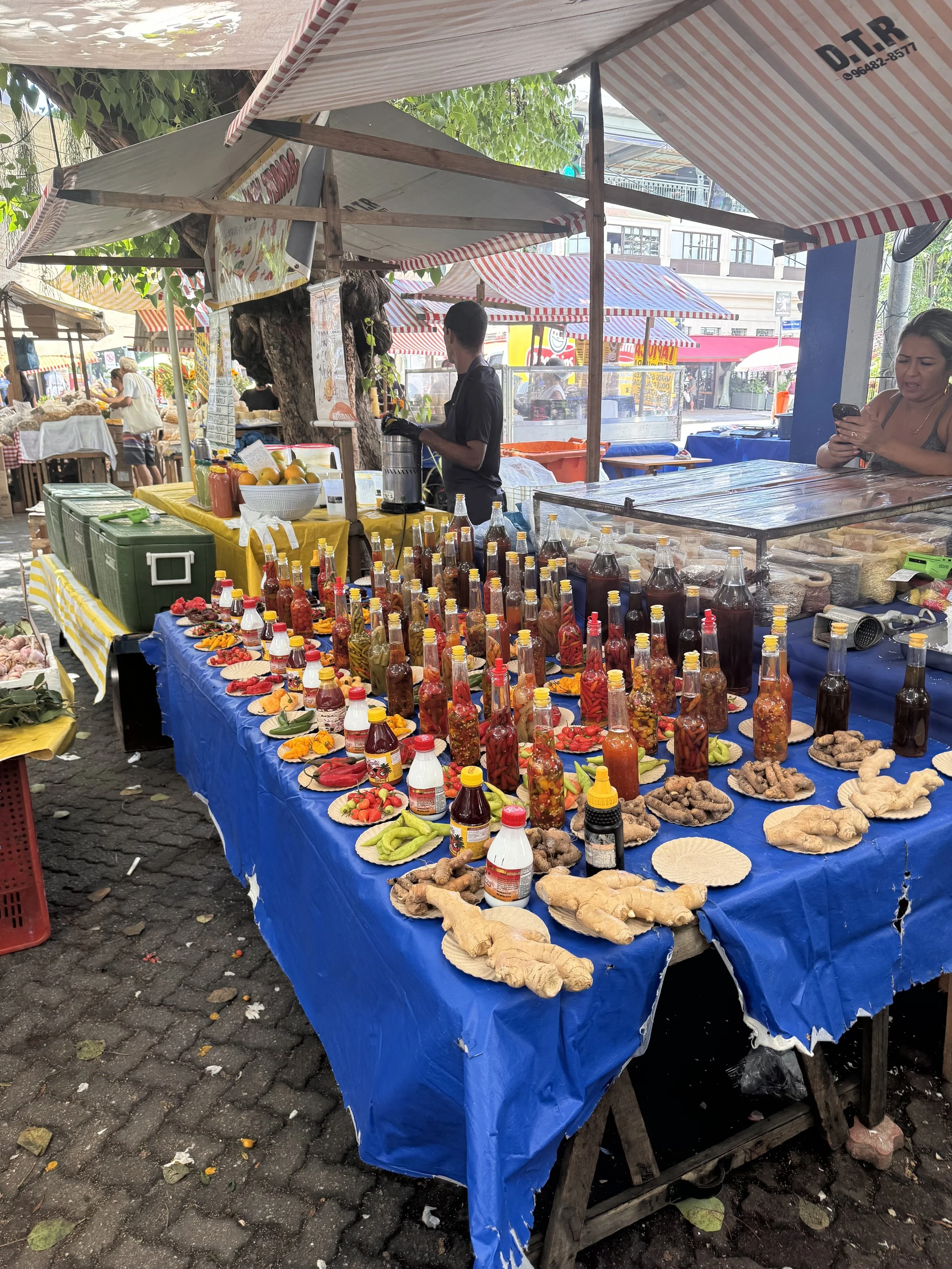
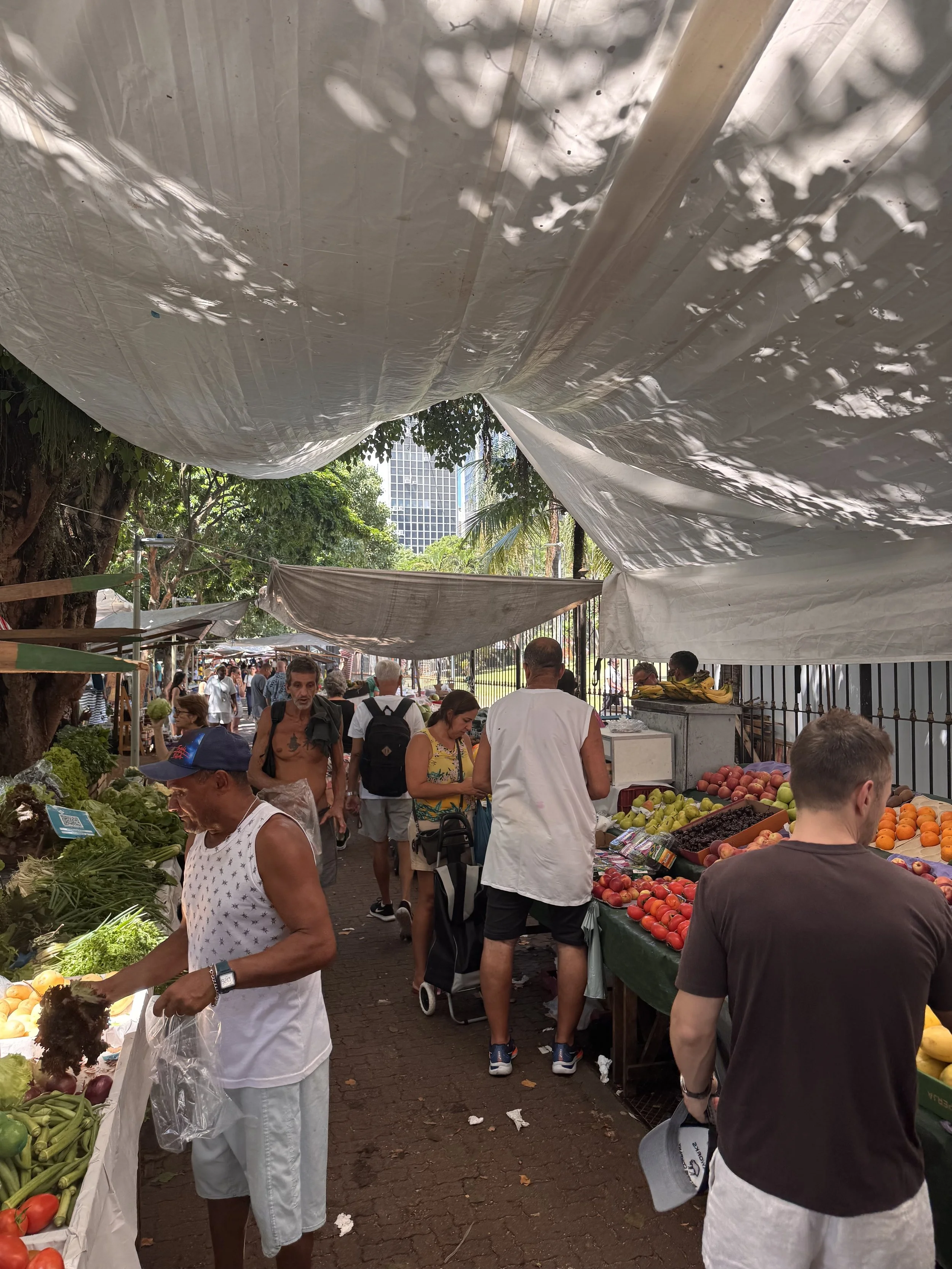
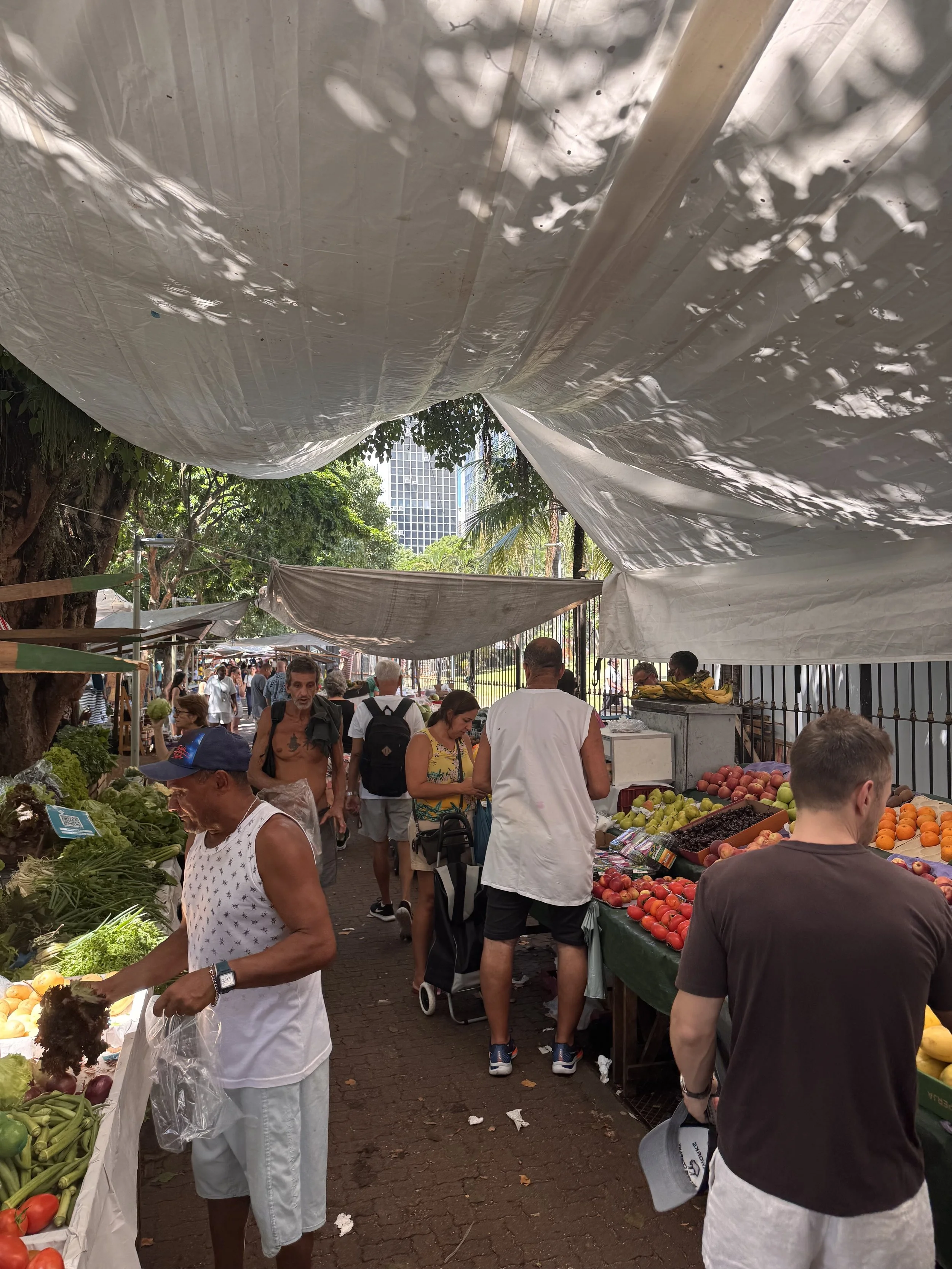
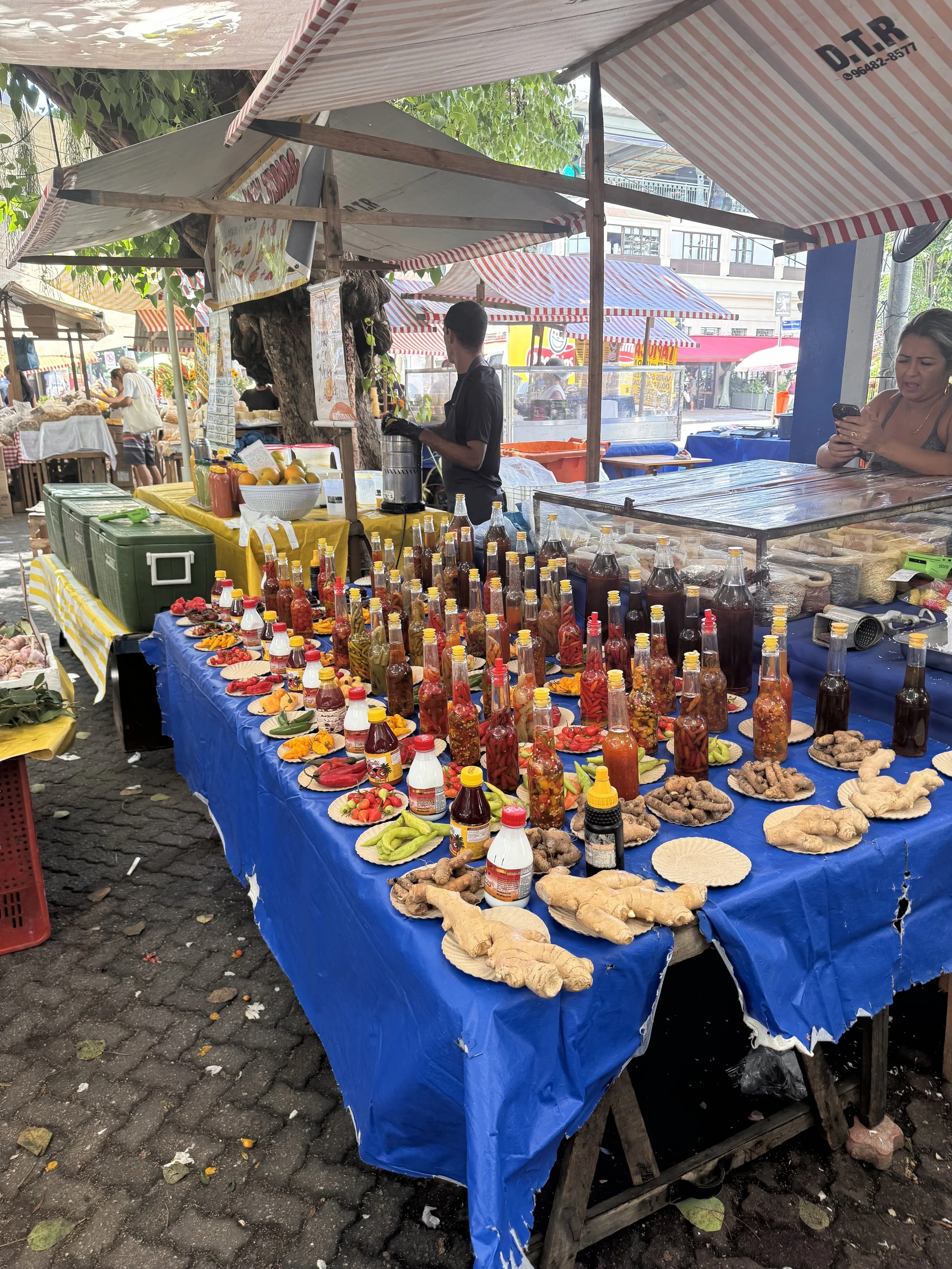
We also enjoyed the Friday morning market, just a couple blocks from our AirBnB, that took over the local square with produce and meat vendors and artisans selling jewellery, bags, and clothing. We happily sat on a park bench, noshing on fresh mango, which the vendor kindly sliced up for us, and I snagged a pair of gold, leaf earrings for a local artisan, making for a lovely souvenir.
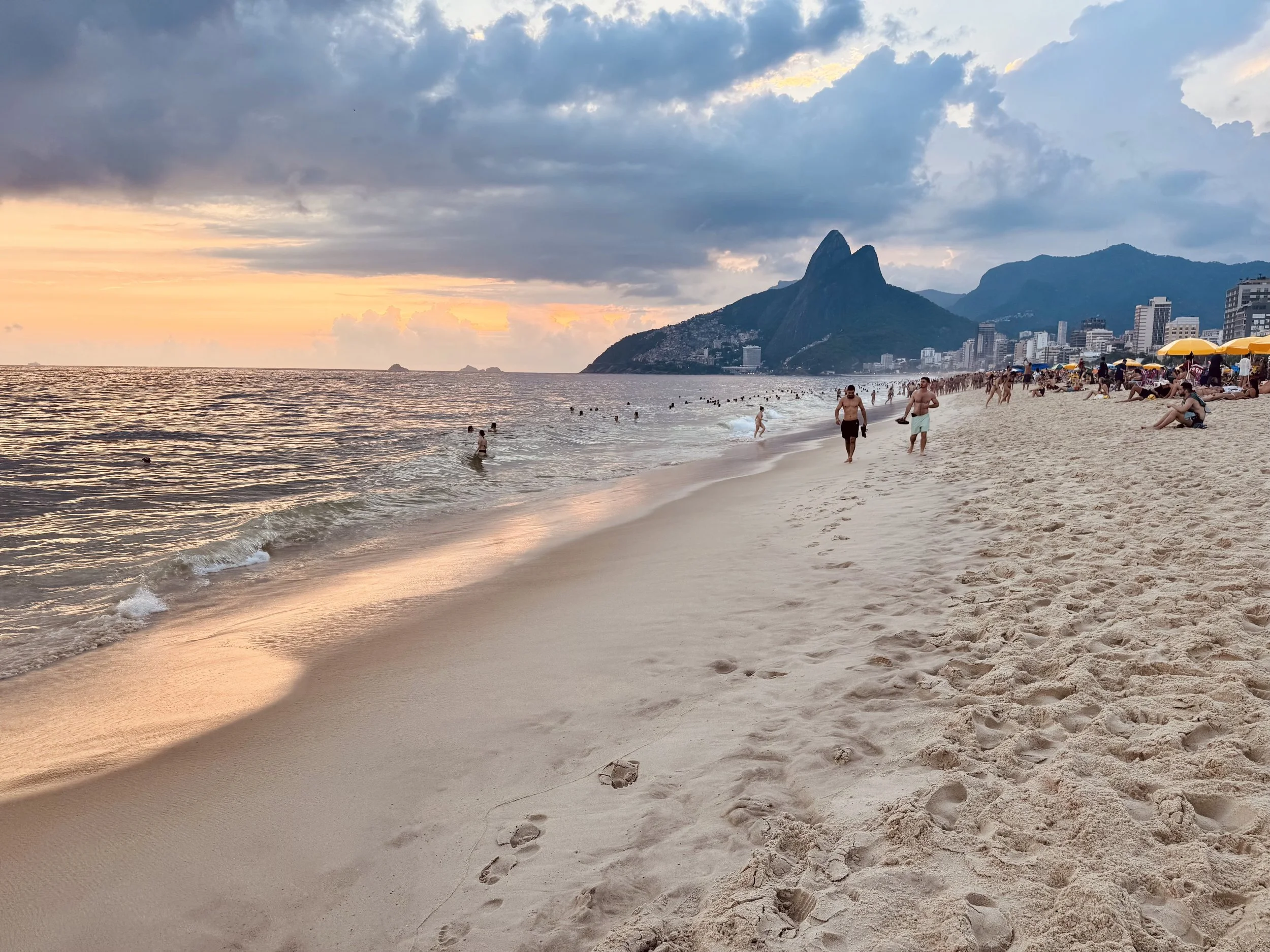
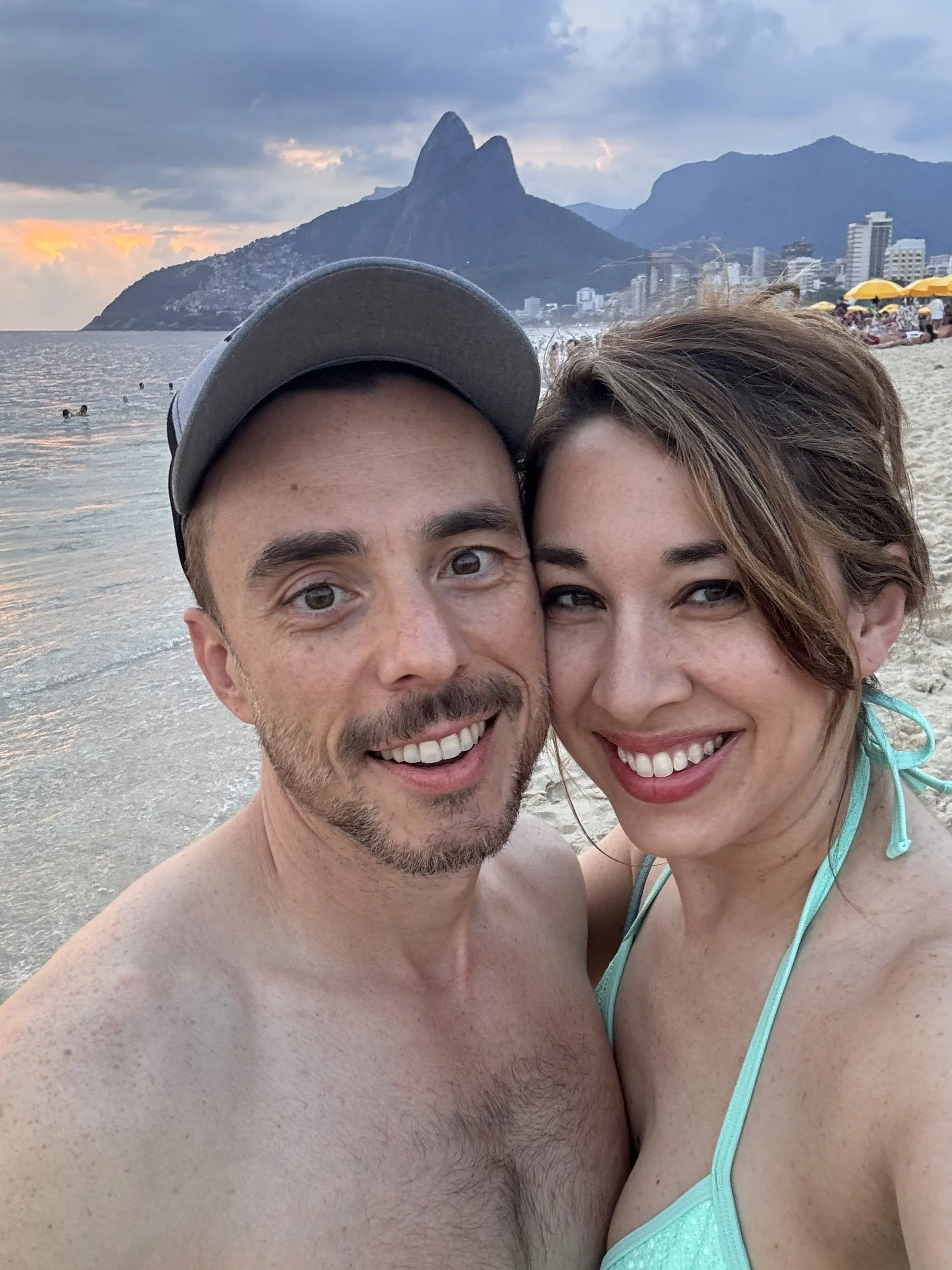
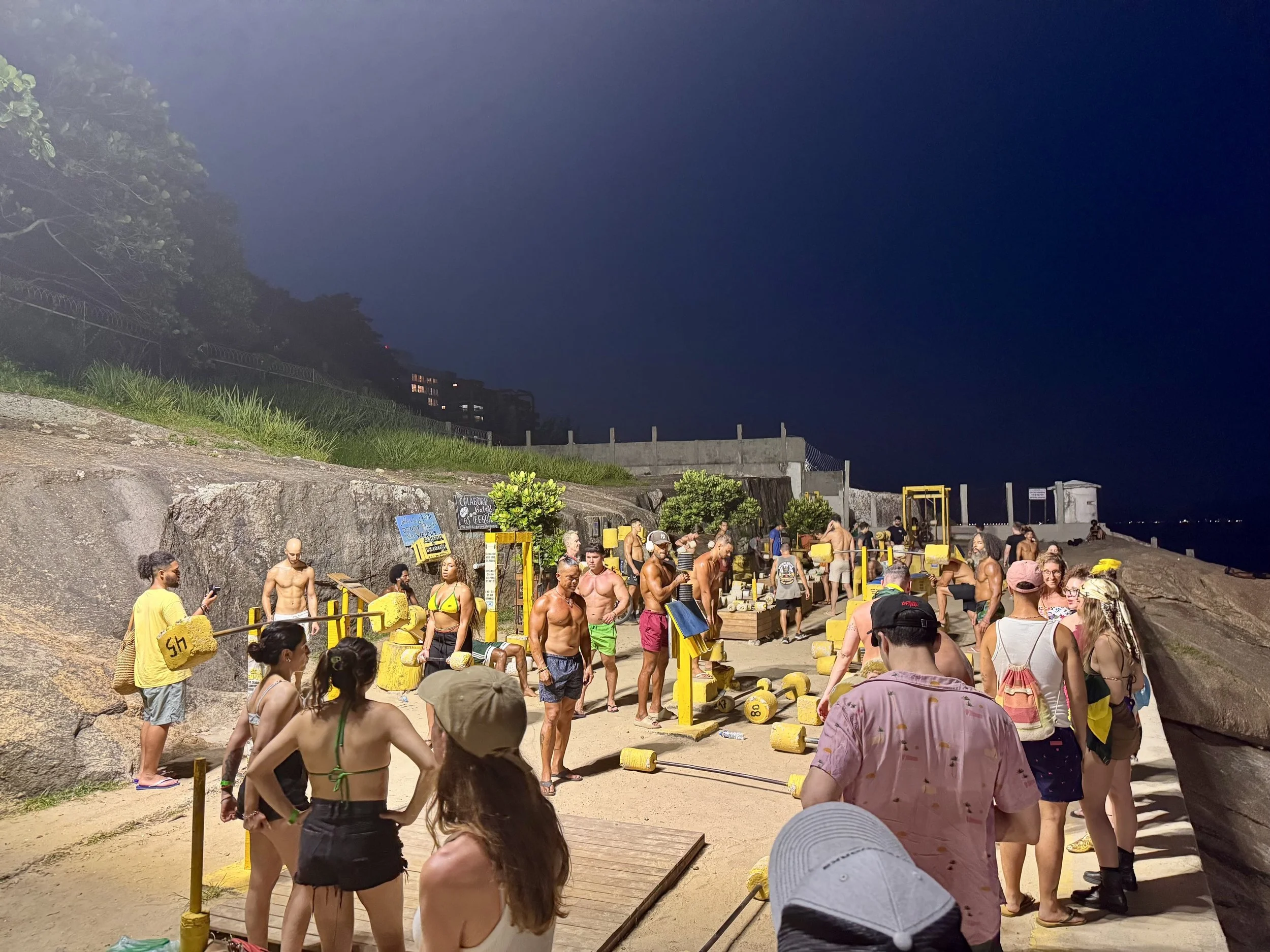
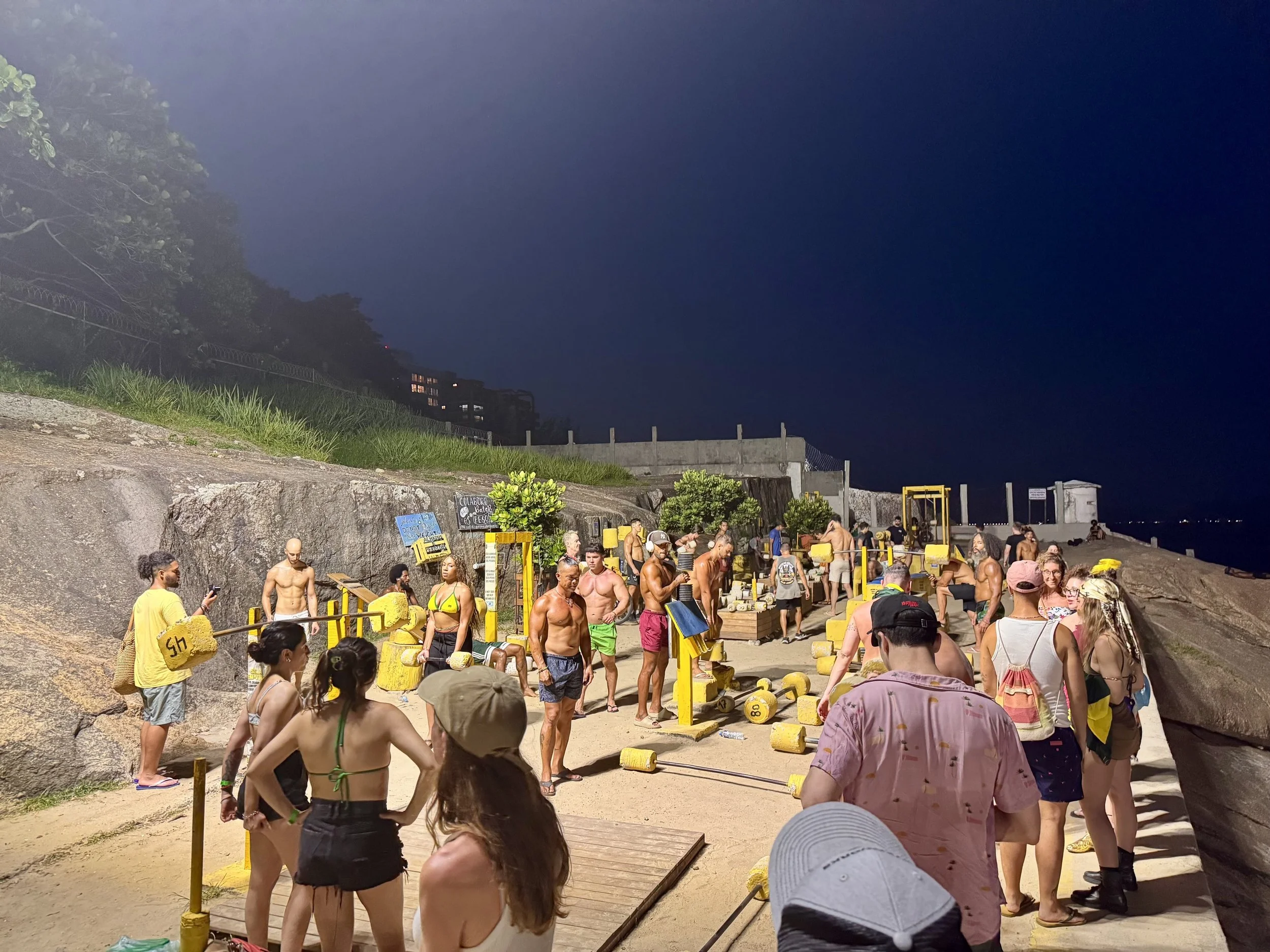
We visited Ipanema Beach twice during our visit. The day we arrived we couldn’t not check out the famed stretch of sand, and so went for a sunset walk along the beach. Even though it was the end of the day, it was still jam-packed full of beach chairs and umbrellas. We learned that there were different unofficial sections of the beach, demarcated by the postos (lifeguard posts). It became very clear from the demographics of the beachgoers when we hit the more family-oriented area or LGBTQ-friendly area, for instance. I don’t think I’d ever seen so many 6-packs (abs not beers) congregated in one place. The sun had set by the time we reached the end of the beach, and we stumbled across an interesting outdoor gym. It looked like it was fit for the Flintstones, with actual rocks for weights.
We reached Arpoador Rock, a rocky promontory separating Ipanema from Copacabana Beach. Locals and tourists were scattered across the rock face, having drinks and jumping into the water. We sat down on the rock, still warm from the day’s sun, and admired the views. A group of tourists sitting near us were enjoying caipirinhas, a Brazilian cocktail, and they pointed us to where we could get them. Caipirinhas are the drink of choice on Rio beaches, consisting of cachaça (Brazil’s national spirit made from fermented sugarcane juice), sugar, lime, and ice. We watched our beachside bartender, working from behind his rickety folding table, pour what looked like a cup of sugar into this drink. We got two variations, a traditional lime as well as passionfruit (I think we preferred the latter, though noted we’d likely ask for a touch less sugar next time).
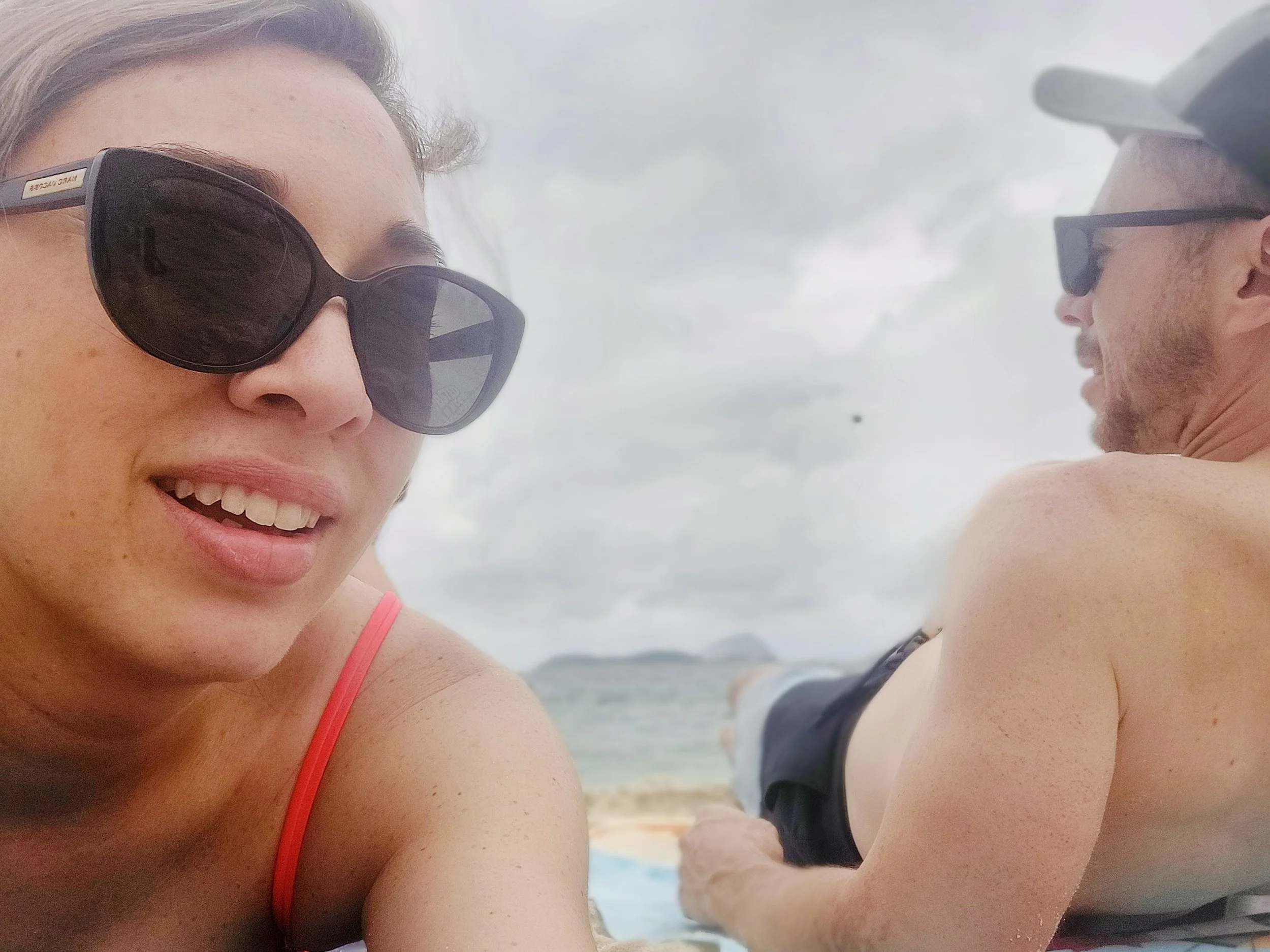
Our second visit to Ipanema Beach was the afternoon after our pickpocketing incident. We hadn’t yet had real lay-in-the-sand beach time, so we figured that would be an appropriate pick-me-up. The clouds had rolled in by the time we arrived, so we didn’t get in much sunbathing; instead, we took the opportunity to do some ocean frolicking. The water was warm and pleasant, but we soon discovered that the sea was feeling feisty. Downright bossy.
There was a line of people bobbing out in the water about 5 or 6 metres out from the shore. Getting to that area was the challenge—the waves were powerful and would knock you over, and the undertow would drag you along the sand as you struggled to get up before the next wave hit. It was somewhat comical at first, tumbling about and rolling around, head over heels, in the water. It was hard not to just laugh hysterically at the absurdity of it. In line with the day, the ocean robbed me of my sunglasses, which I’d forgotten were on my head (there is now some super cool sea creature rocking my shades). I eventually retreated but Dave continued his battle with the ocean waves. Unfortunately, after a wave took him down and he scrambled to get back up, he heard a pop in his knee. He later hypothesized it was a meniscus tear, which meant he had a bit of a limp for the duration of our travels. All the shenanigans, with the pickpocketing and the injury, has since led us to dub the day “Black Saturday”.
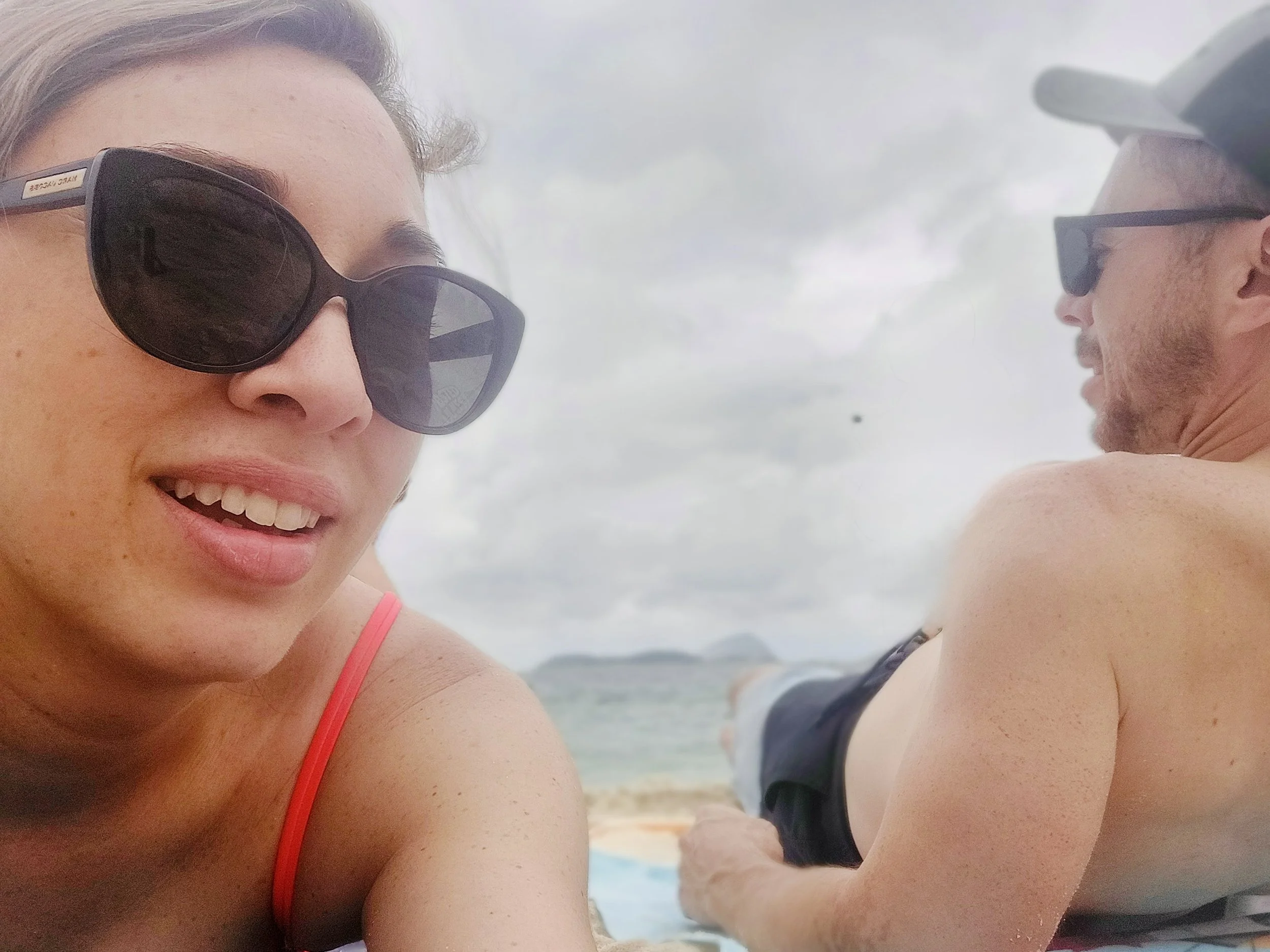
last image of my sunglasses, RIP
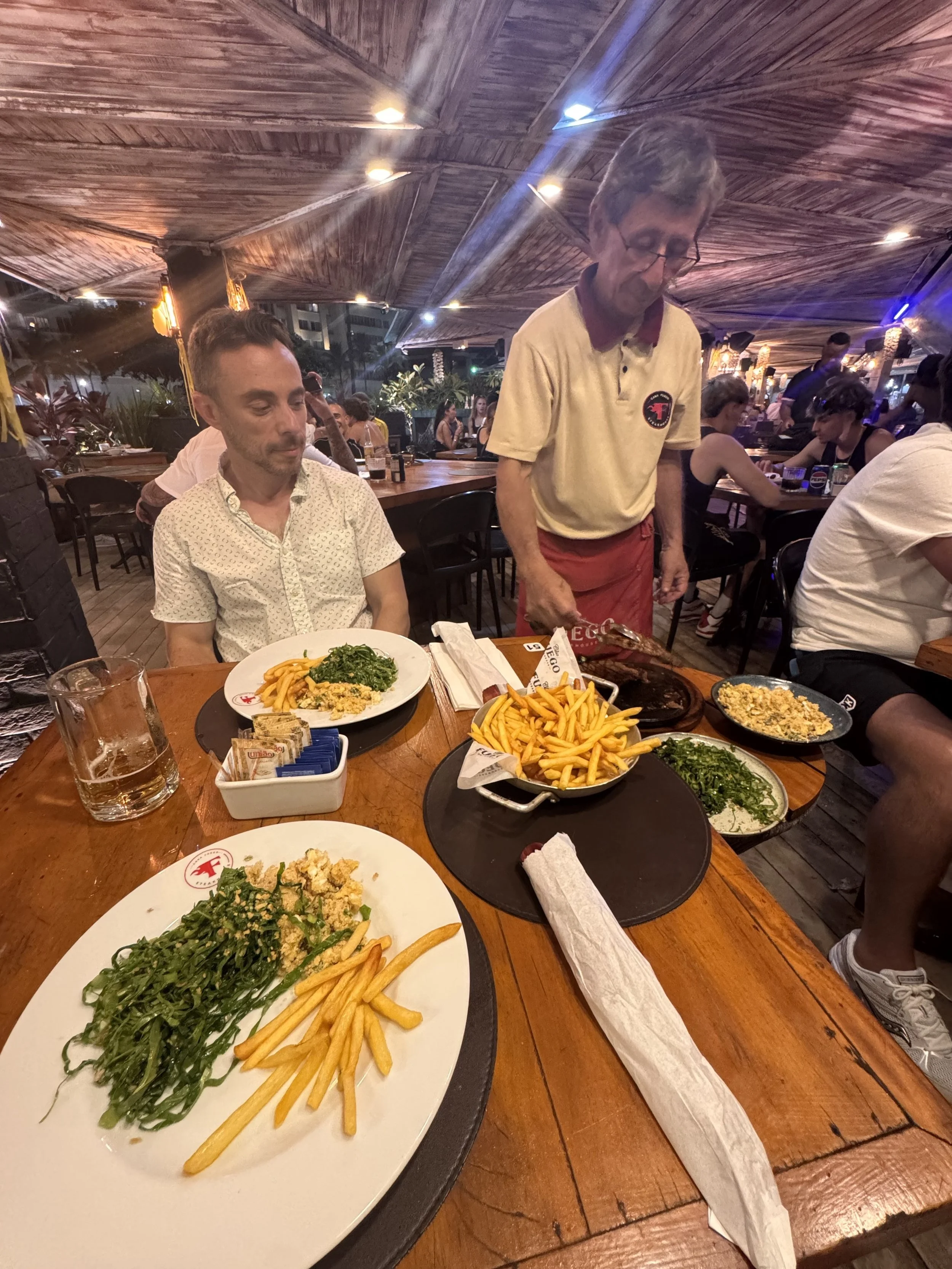
Strangely, Rio’s most famous beach, Copacabana, is one we only managed to get to at night. It had what felt like a much broader boardwalk than Ipanema, and it was lined with a host of small, beachside restaurants. We strolled along the boardwalk, checking out the different food options for dinner, when we witnessed someone being robbed in front of us. I first thought the two men were getting into a fight, but I soon realized that one guy had ripped the man’s chain off his neck and then ran to jump on a nearby motorbike driven by a getaway driver. It definitely put me in vigilant mindset for the rest of our walk. We eventually settled on a beachside spot, and I was able to relax, enjoy some steak, and make conversation with the Italian family at the next table (well, me practicing introducing myself in Italian, and Dave actually conversing in Italian). While the beach boardwalk was lively enough at night, I imagine it would be a real experience during the daytime.
Centro & Santa Teresa
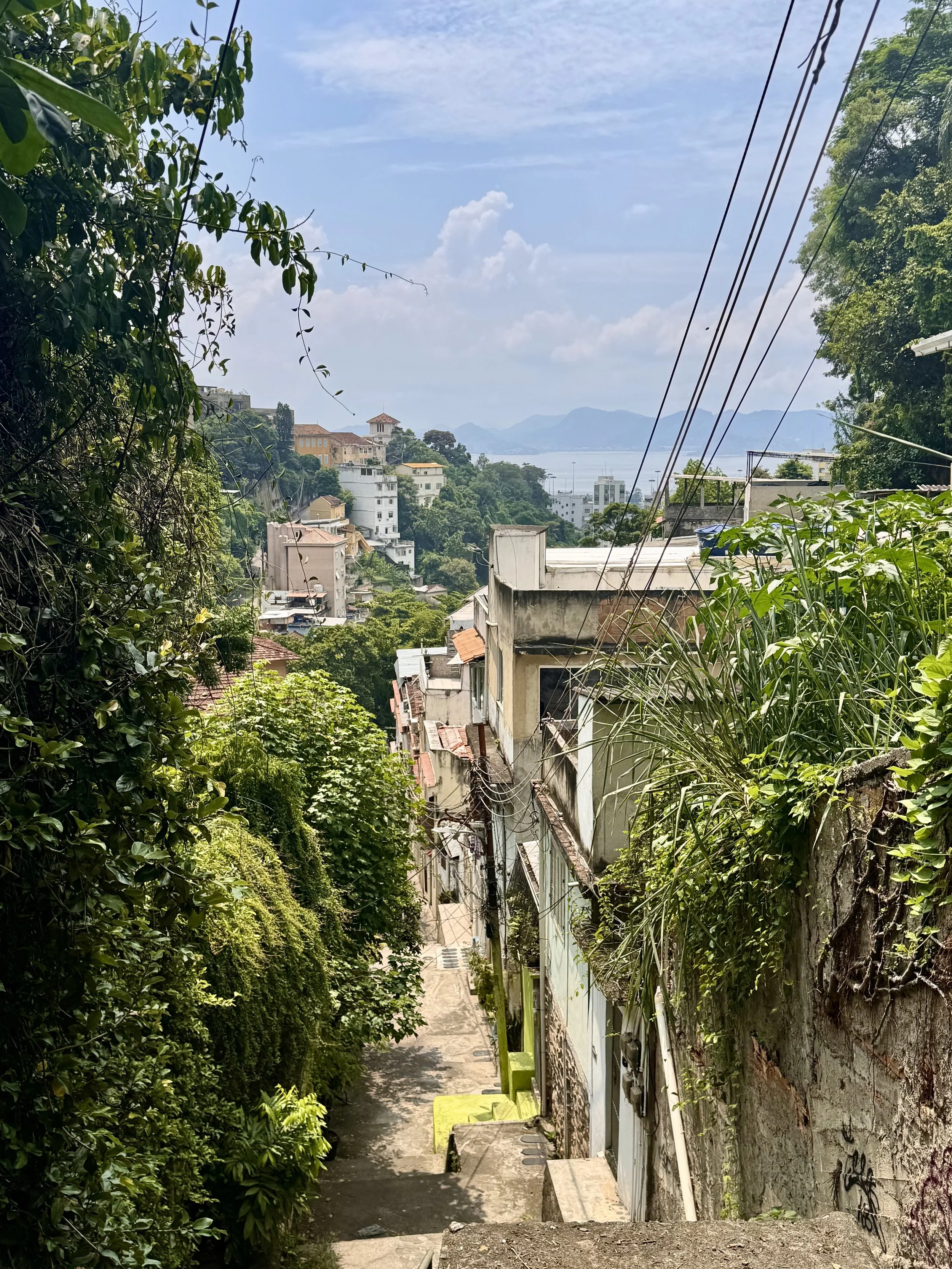
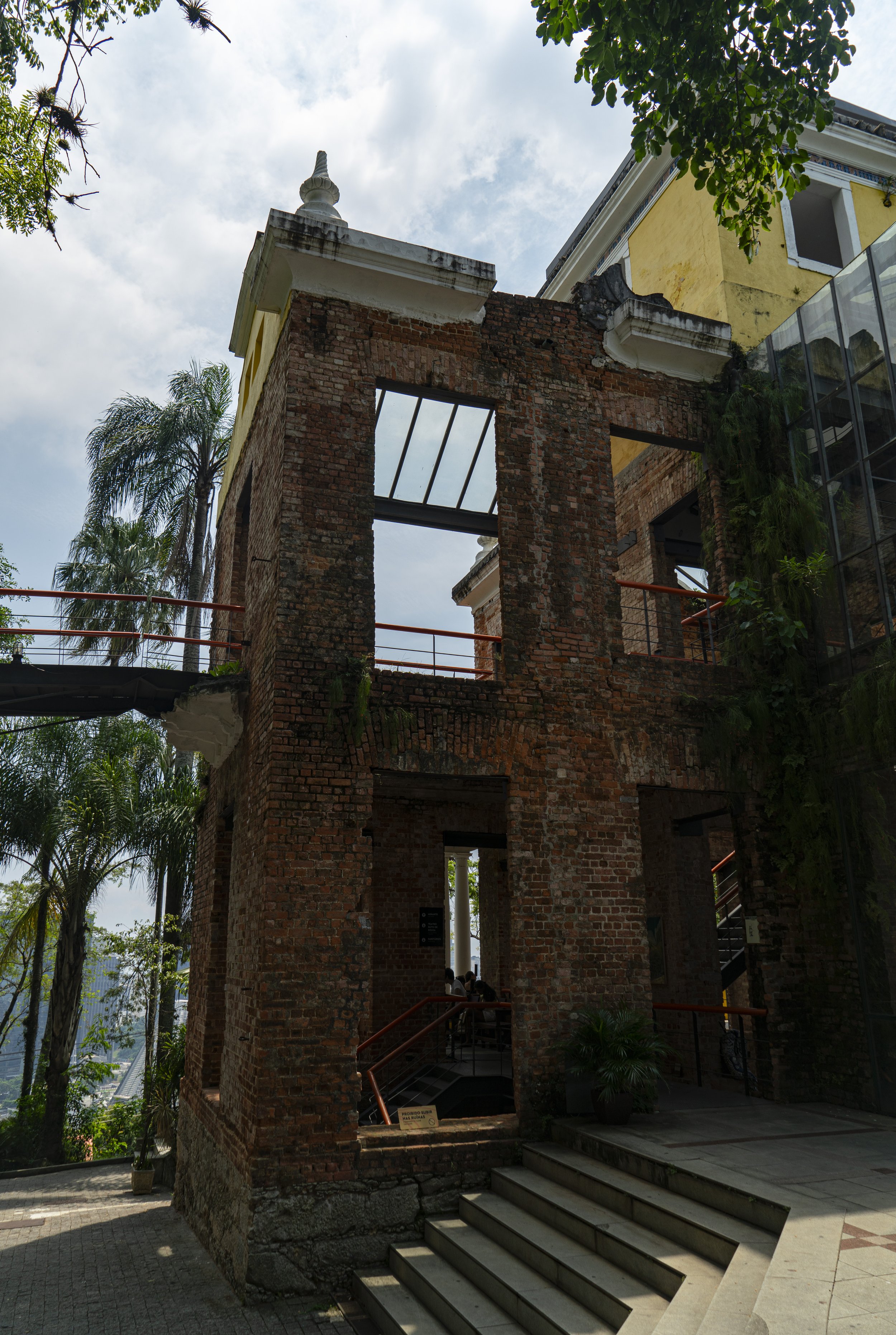
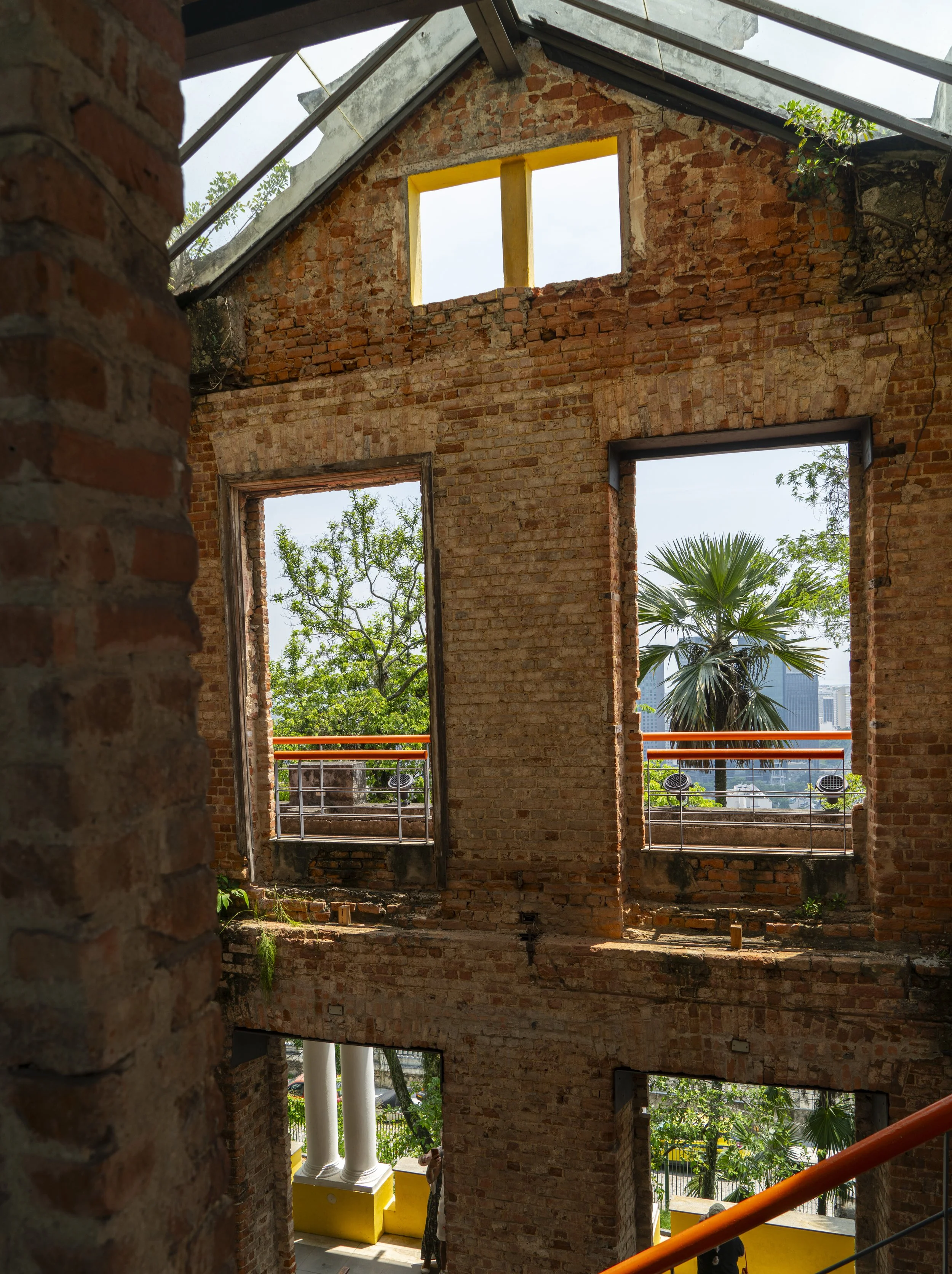
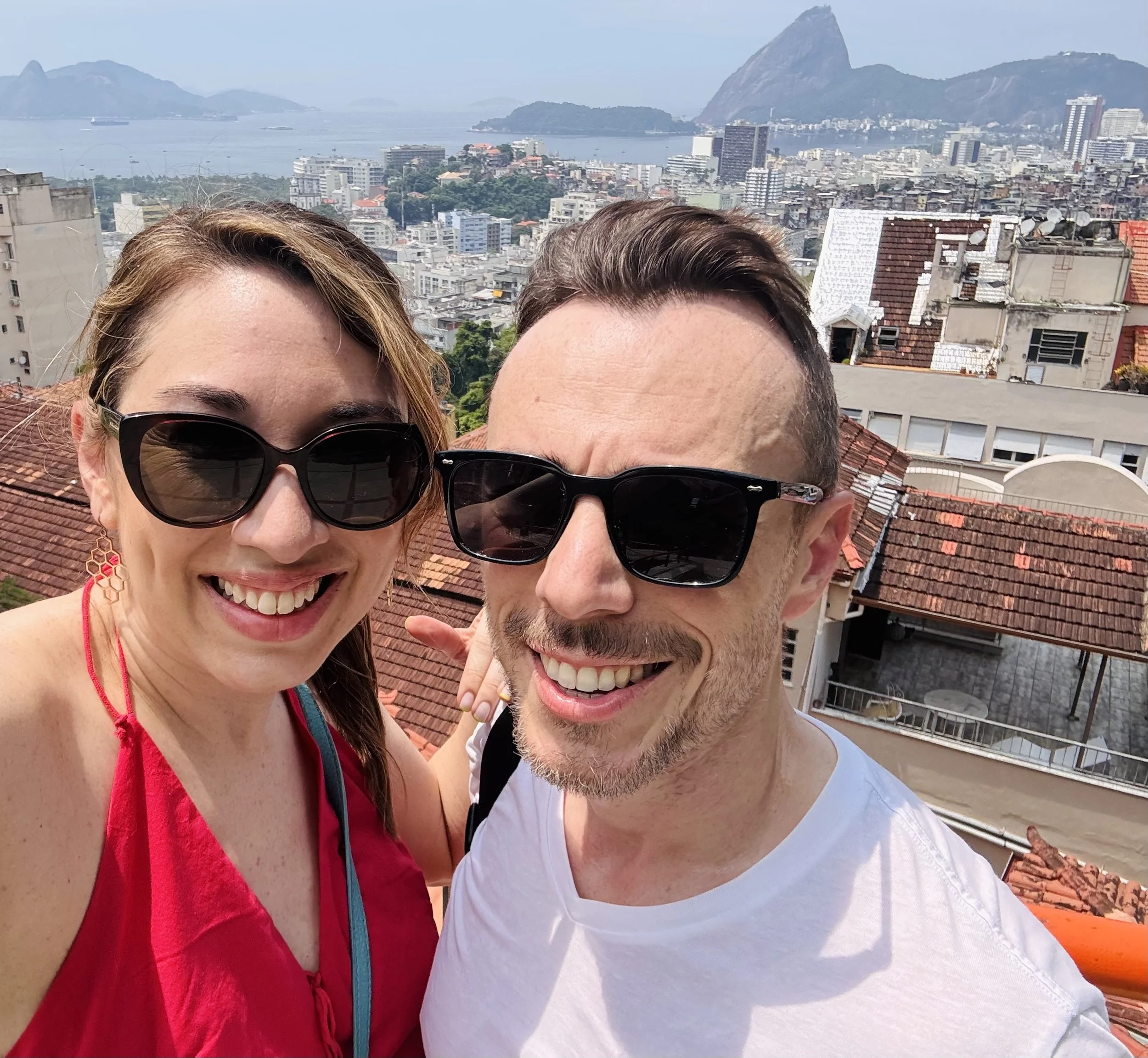
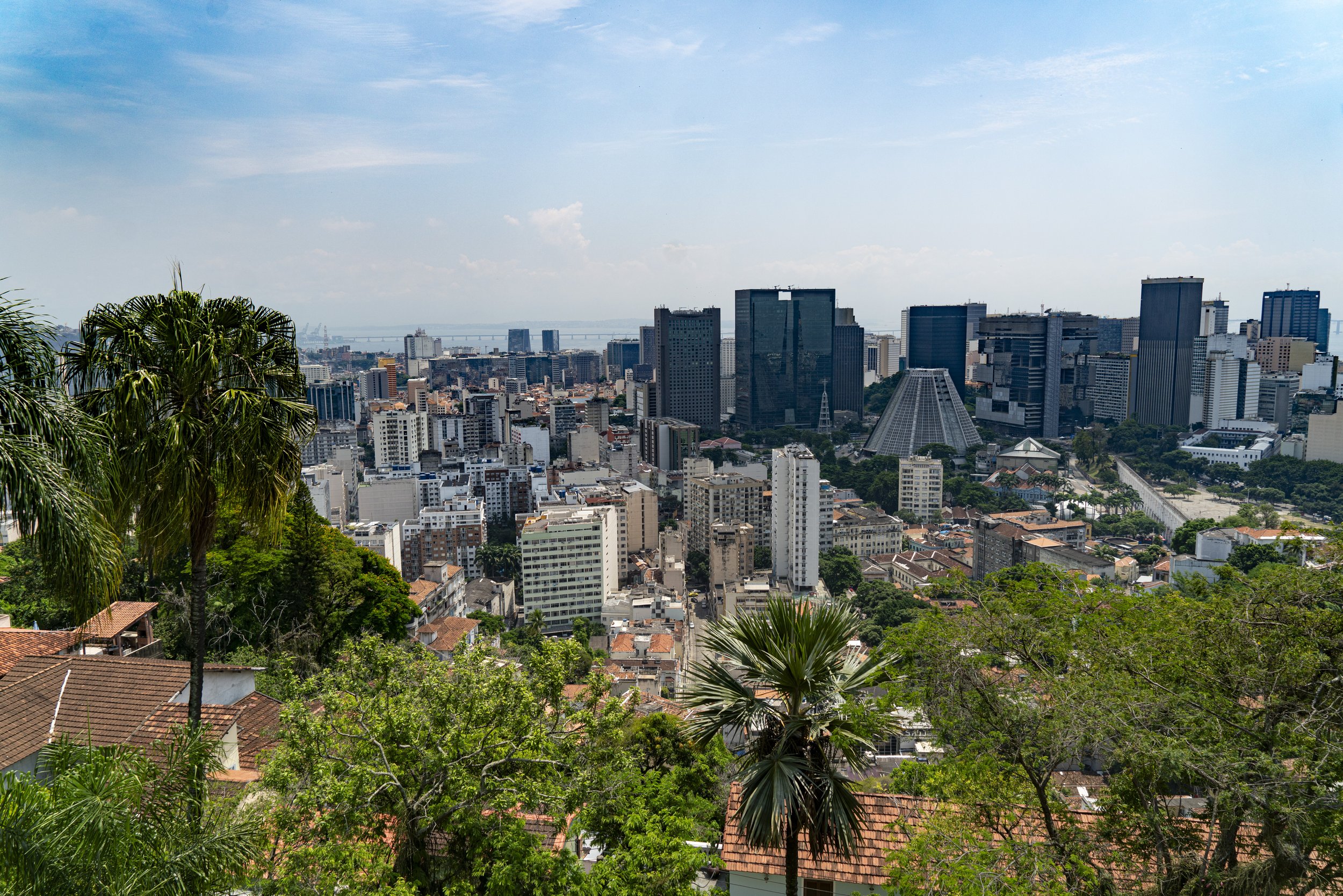
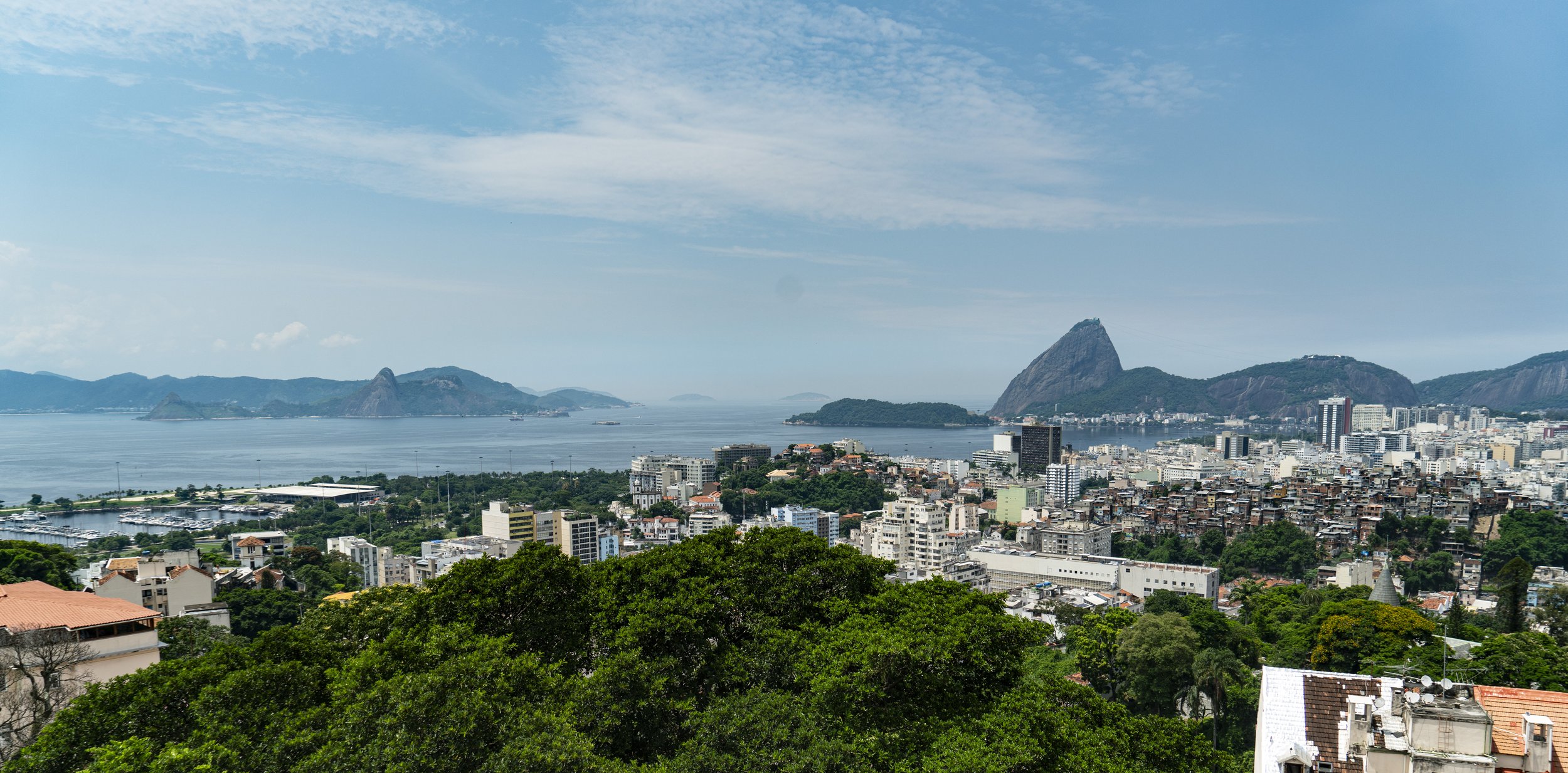
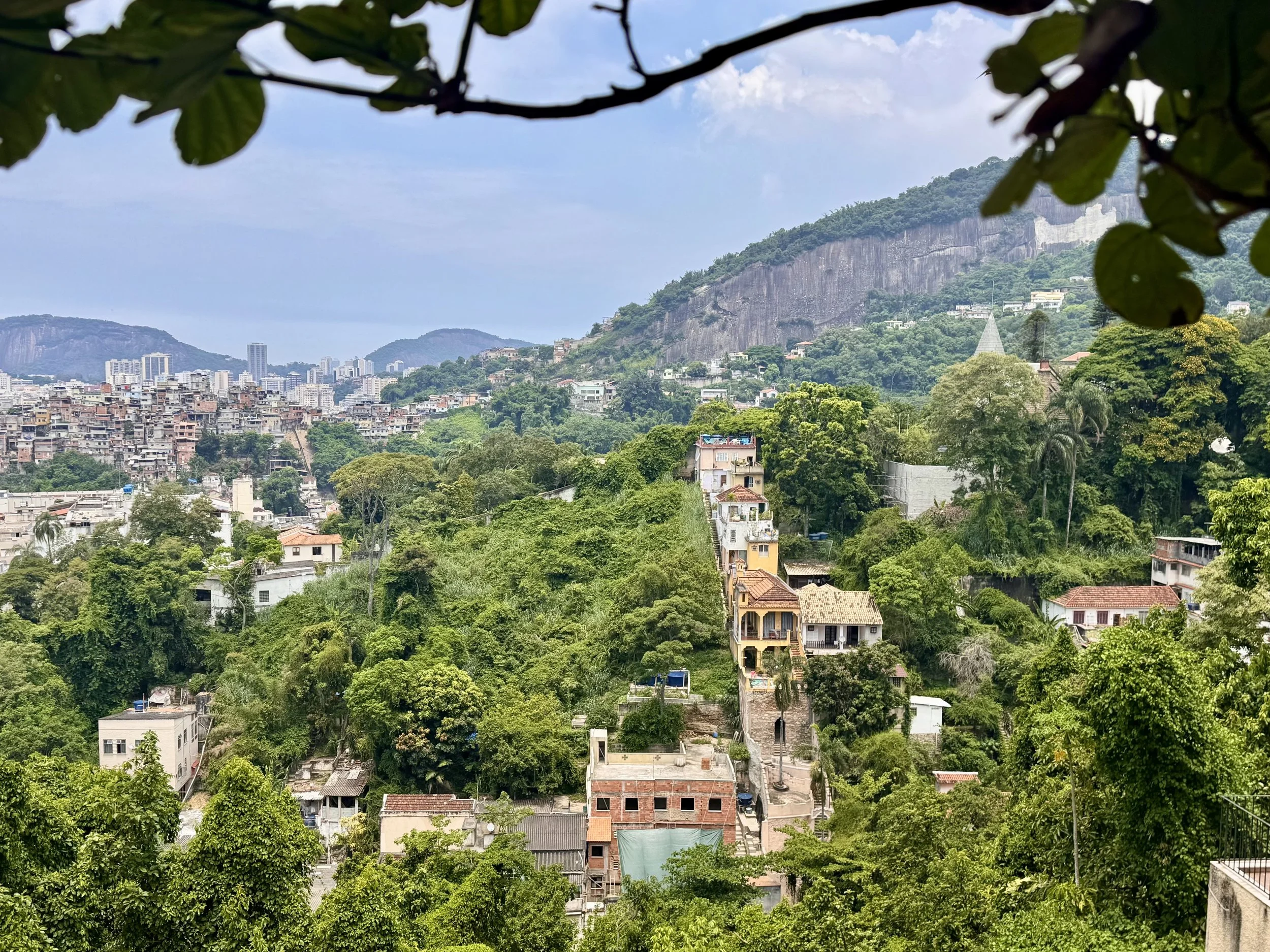
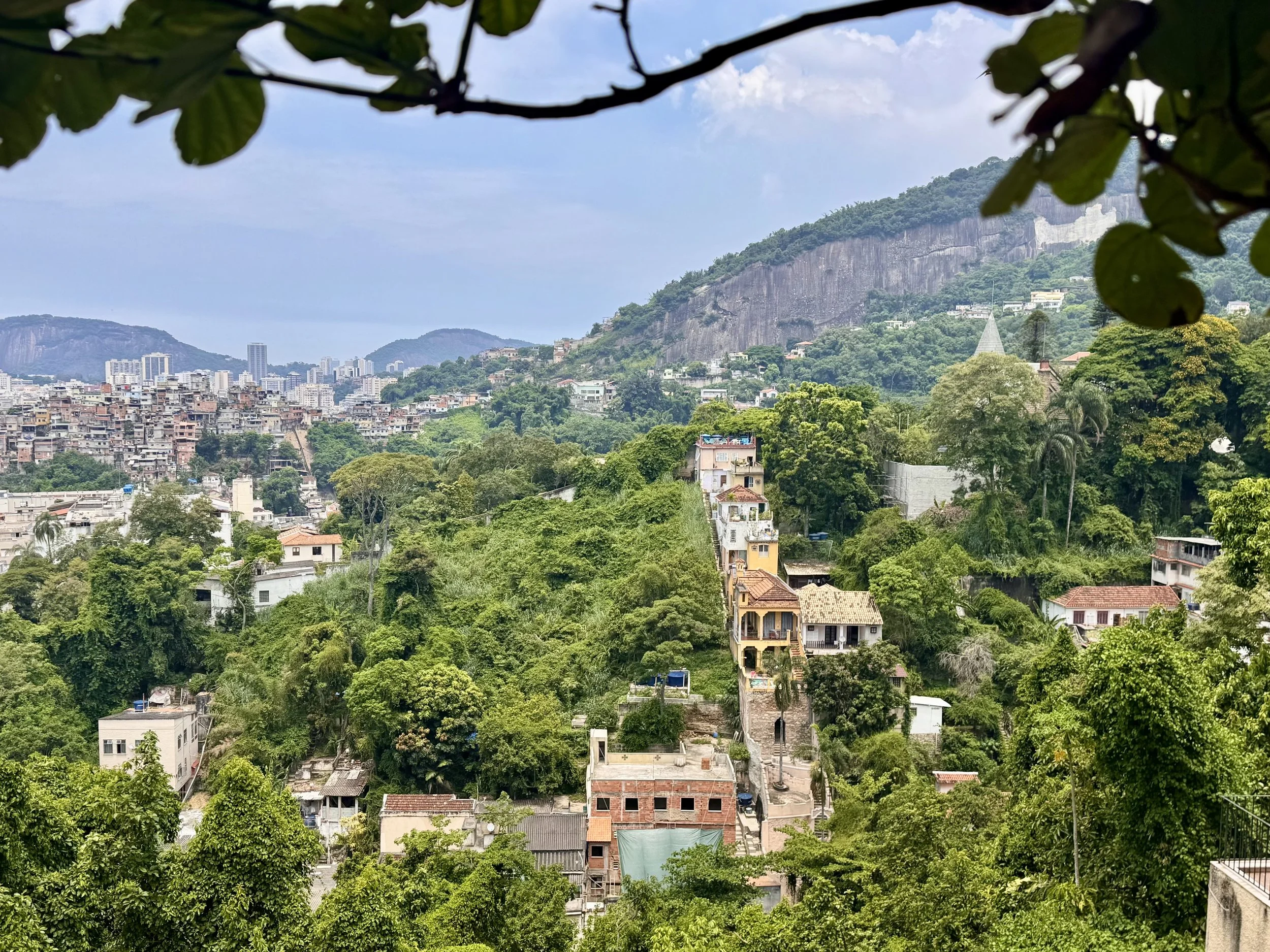
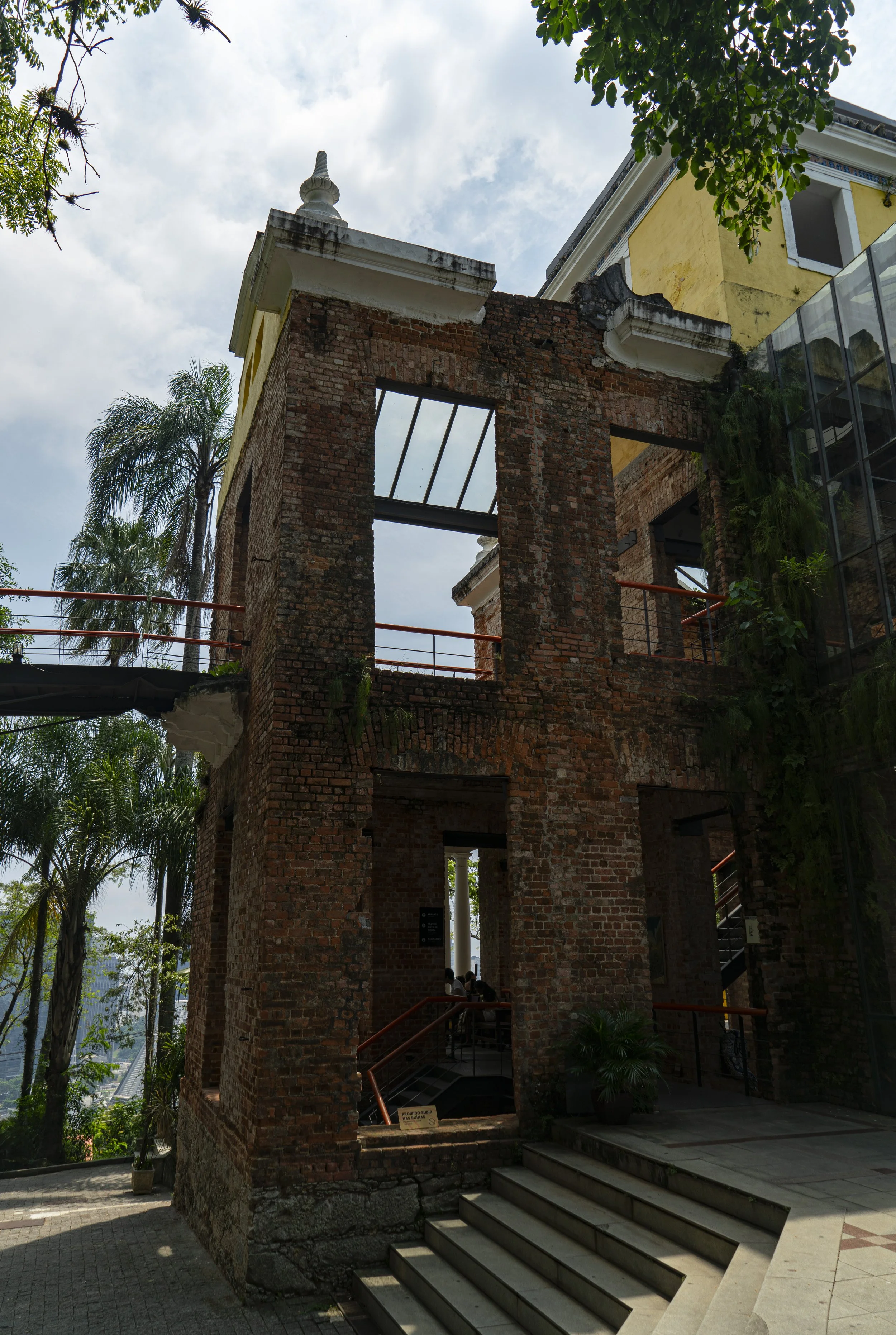
One of our favourite days in Rio was walking around the Centro and Santa Teresa neighbourhoods, about a 30-minute metro ride north of the beaches. Our first stop was Parque das Ruinas, a public park with an art gallery within the ruins of a mansion. Santa Teresa is known for being rather hilly, so navigating to the park from the metro station involved a very sweaty uphill walk. We were rewarded for our efforts with a panoramic vista from the top of the ruins, and we tried to orient ourselves to the different neighbourhoods in view. While we were enjoying our drinks at the park’s cafe, we were entertained by small monkeys scampering through the colossal tree rising up next to us.
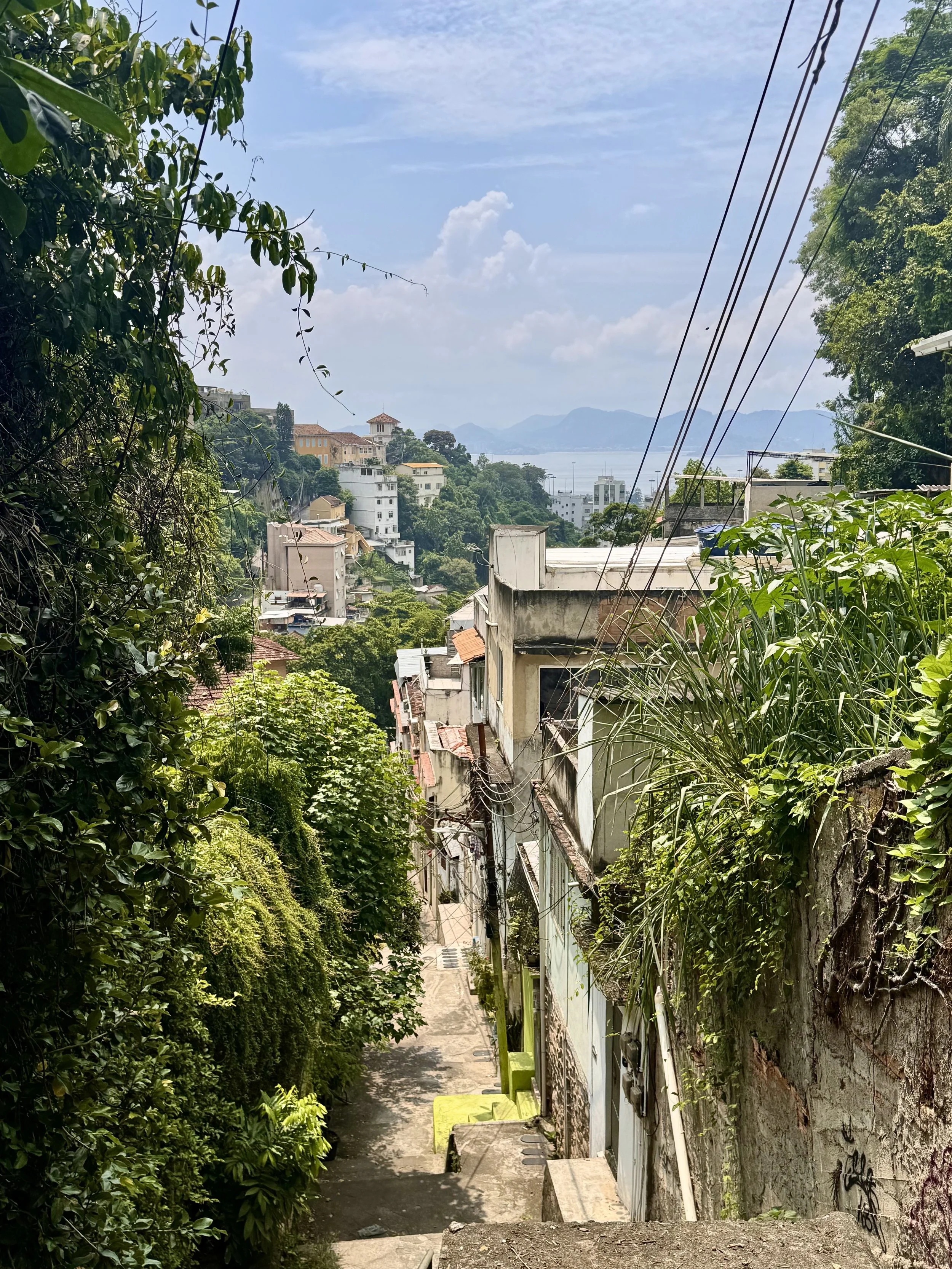
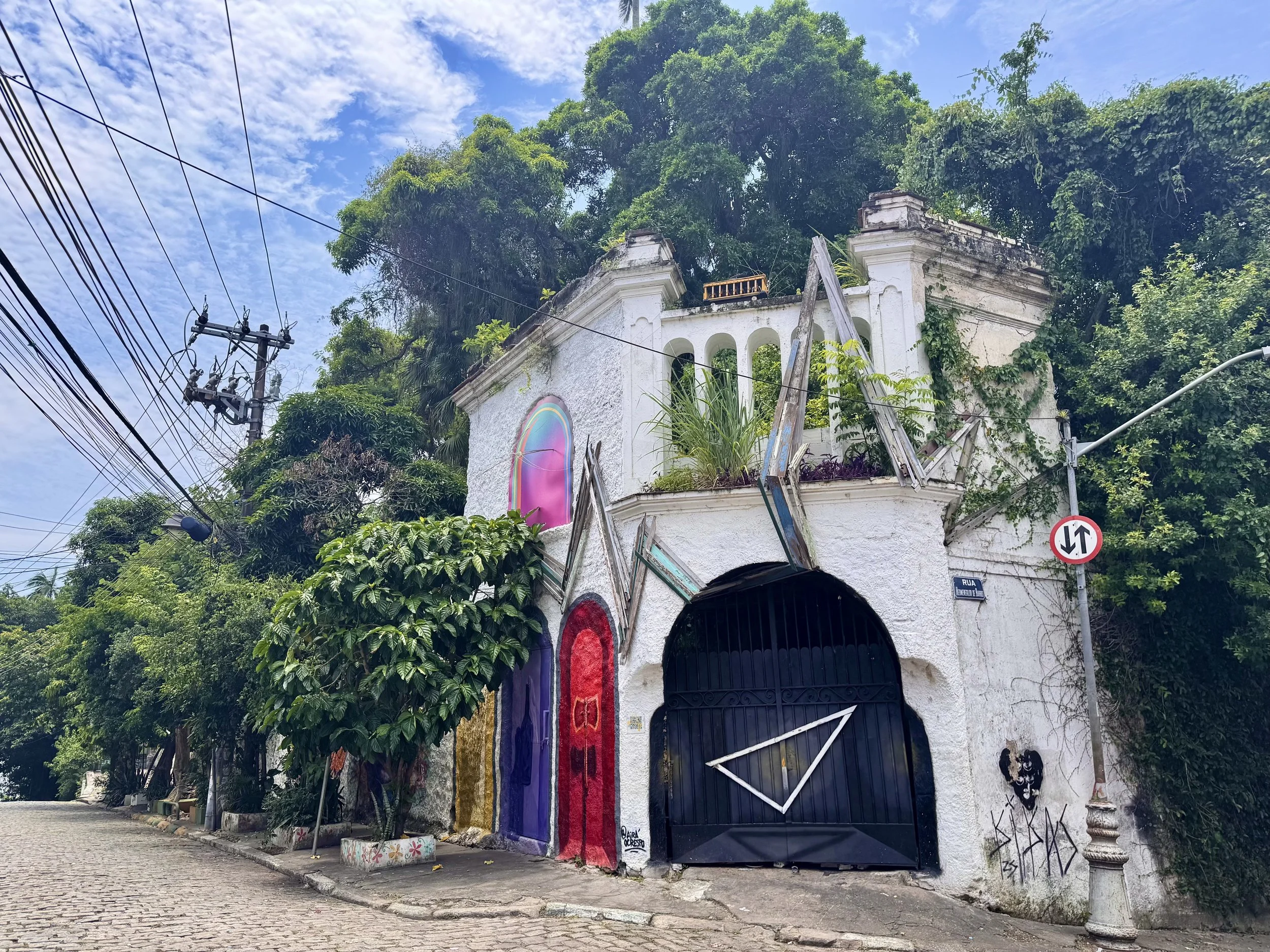
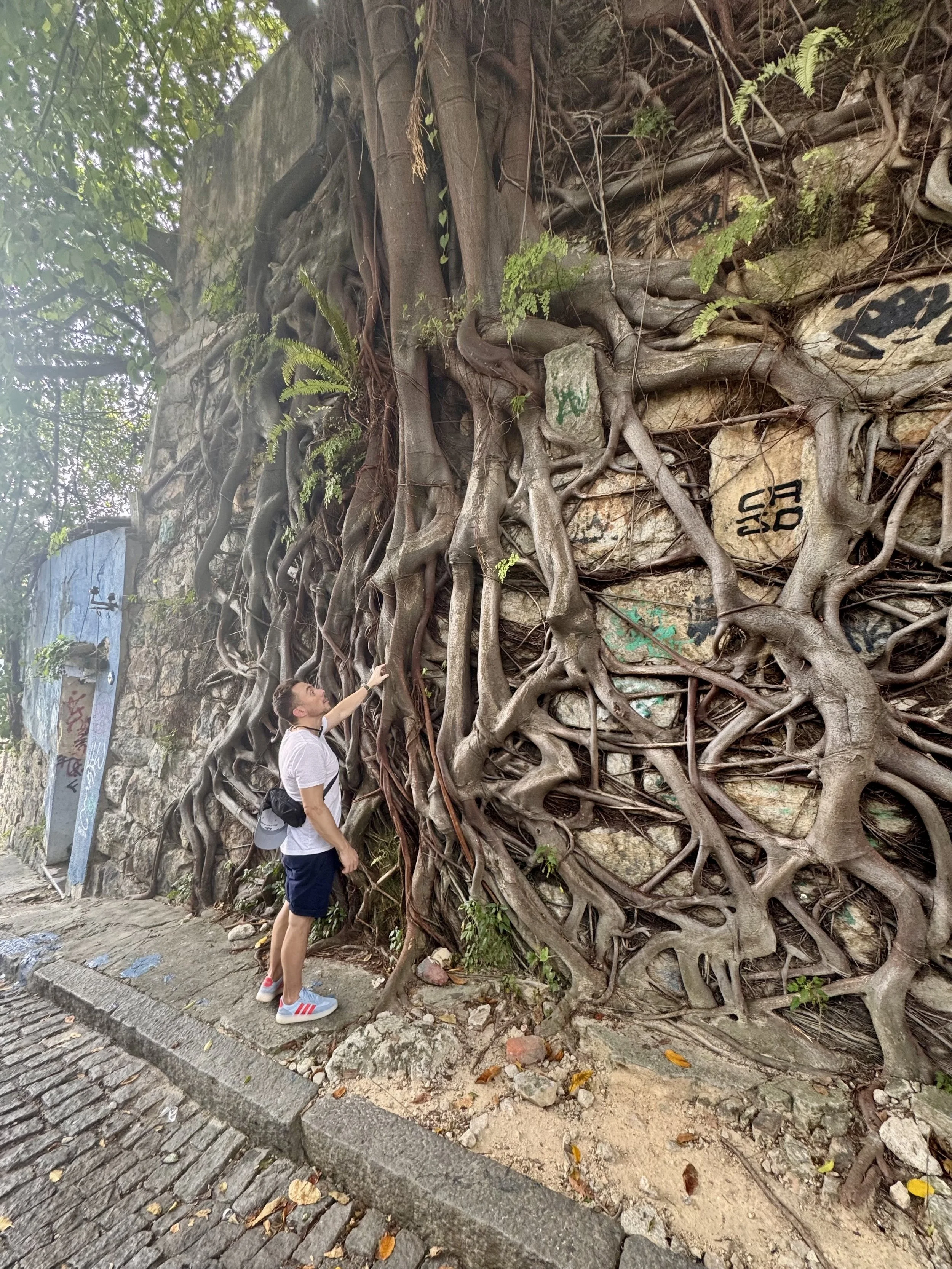
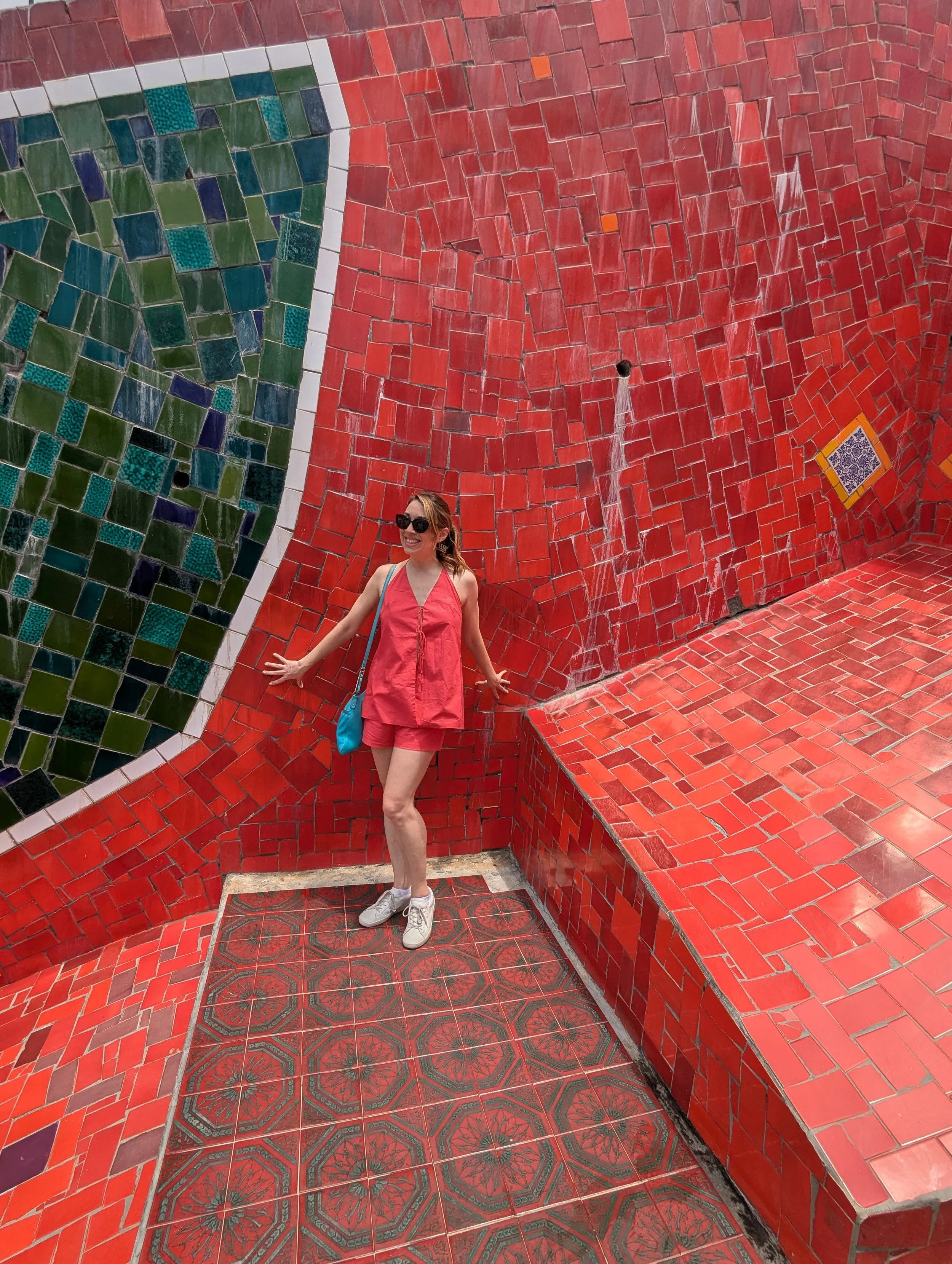
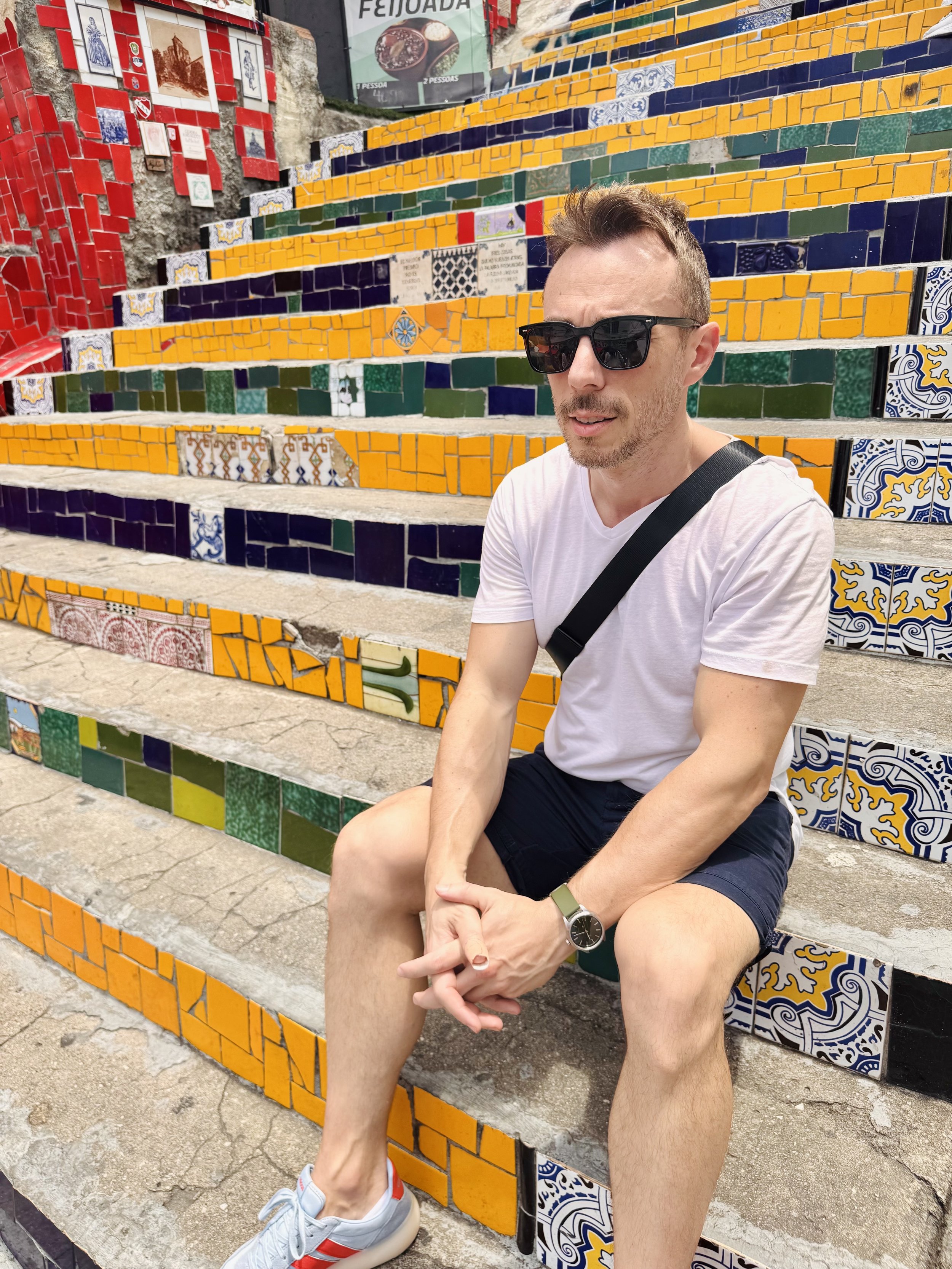
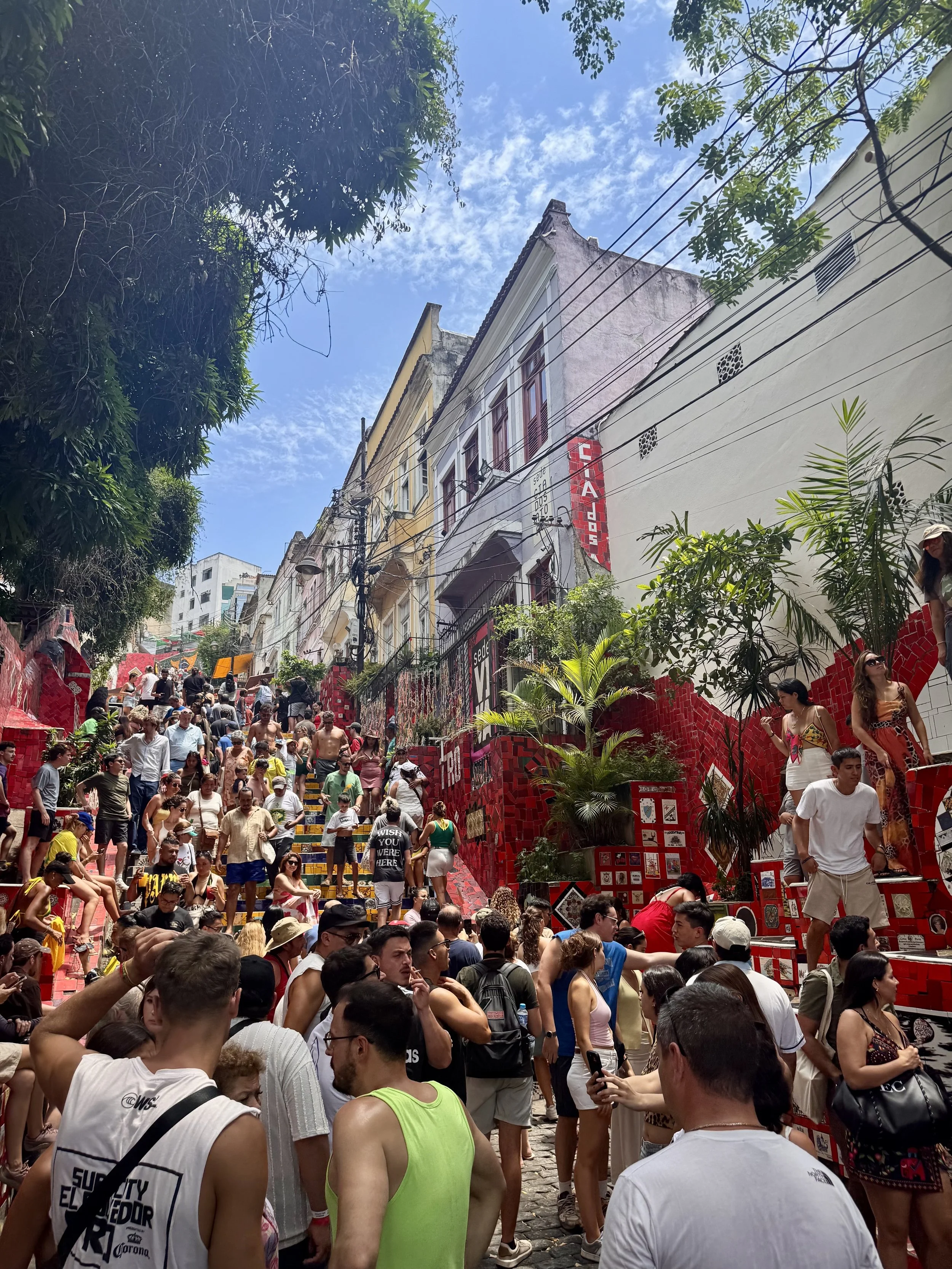
From there, we picked our way down the cobblestoned hill, passing through the charming neighbourhood and past an astonishing set of tree roots, looking almost like a writhing pit of snakes or something out of H.R. Giger’s imagination, supporting large trees growing out of a stone wall. It wasn’t long before we reached the famed Selarón Steps. The work of Chilean-born artist Jorge Selarón, it consists of 215 steps covered in over 2000 tiles from over 60 countries. He apparently began it in 1990 and continued to work on it, tweaking and changing things, until his death in 2013. It was an absolute riot of vibrant colours, and it was amusing to make our way down the steps, peering at individual tiles and spotting the Canadian-sourced ones. The steps were jam-packed with tourists, jostling for position and the ideal selfie.
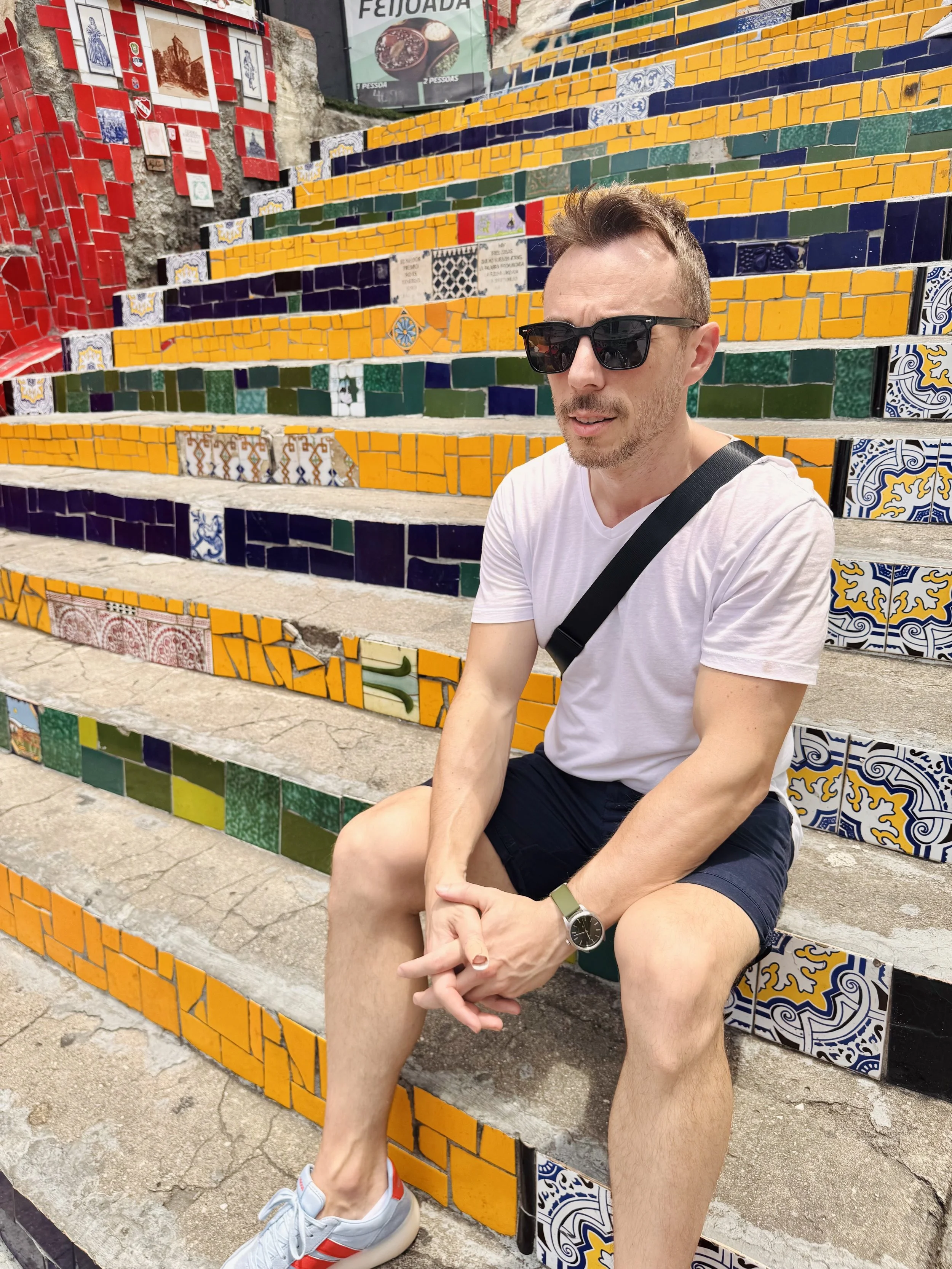
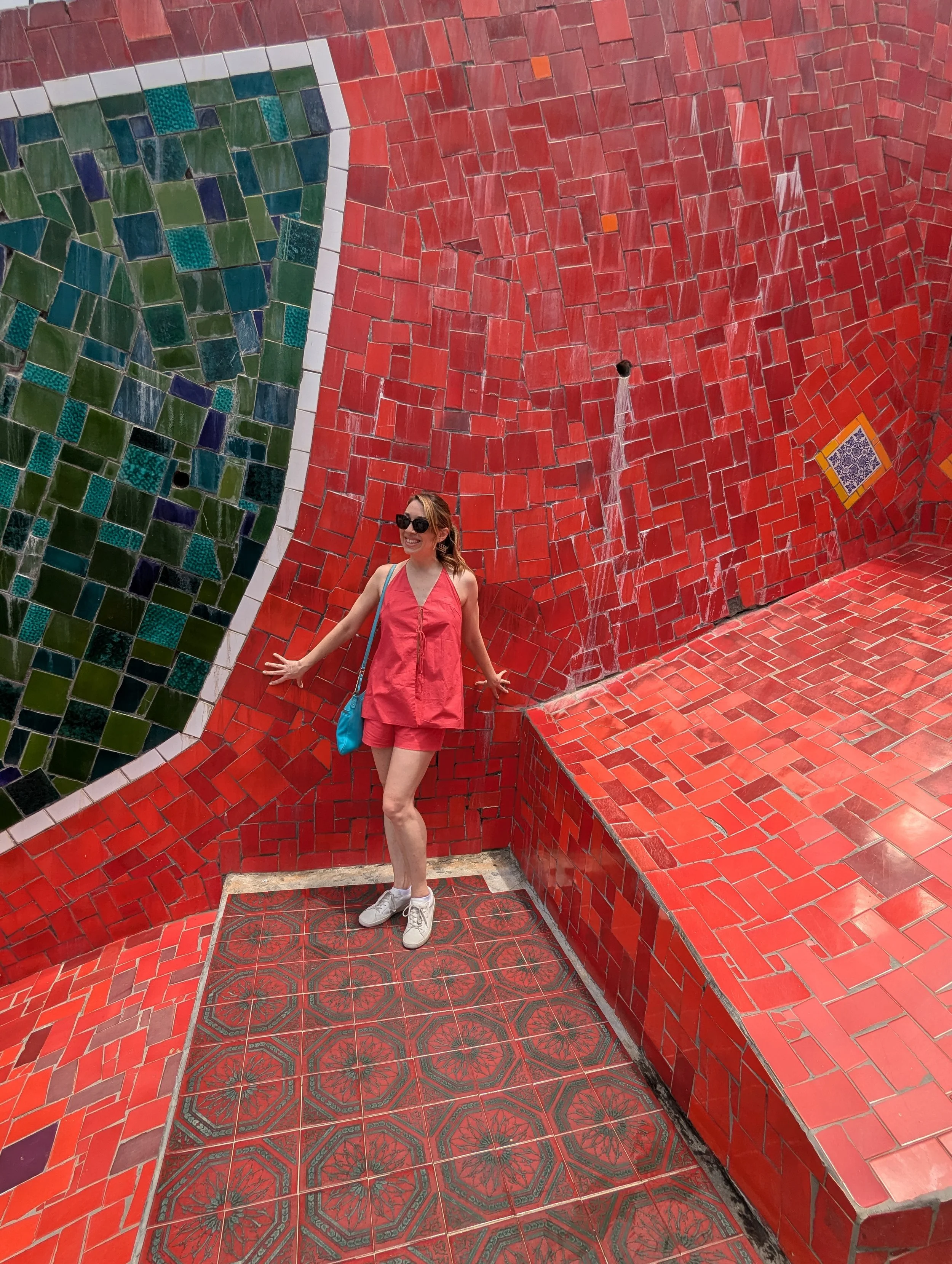
“Man does not die when he ceases to live but when he ceases to love”
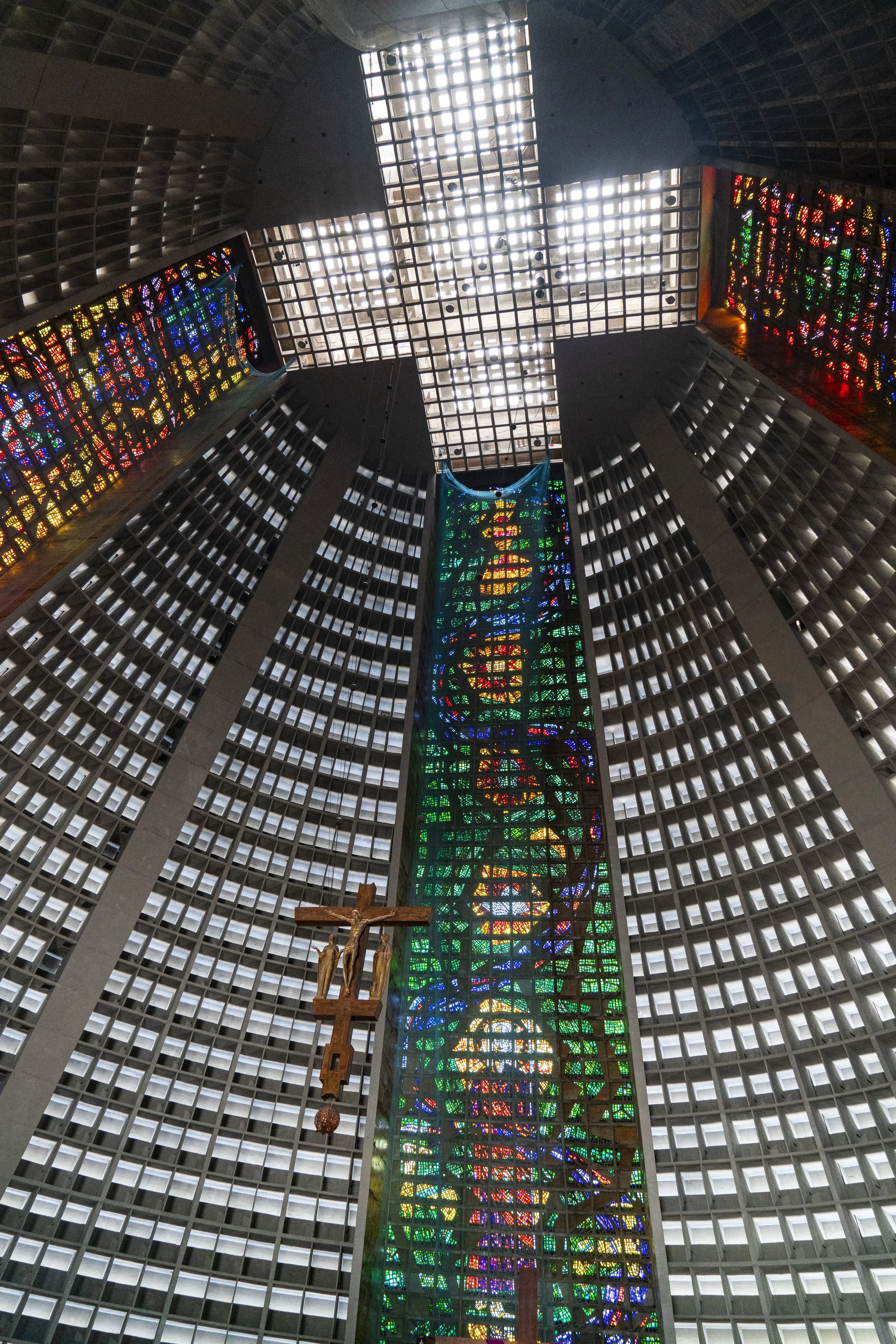
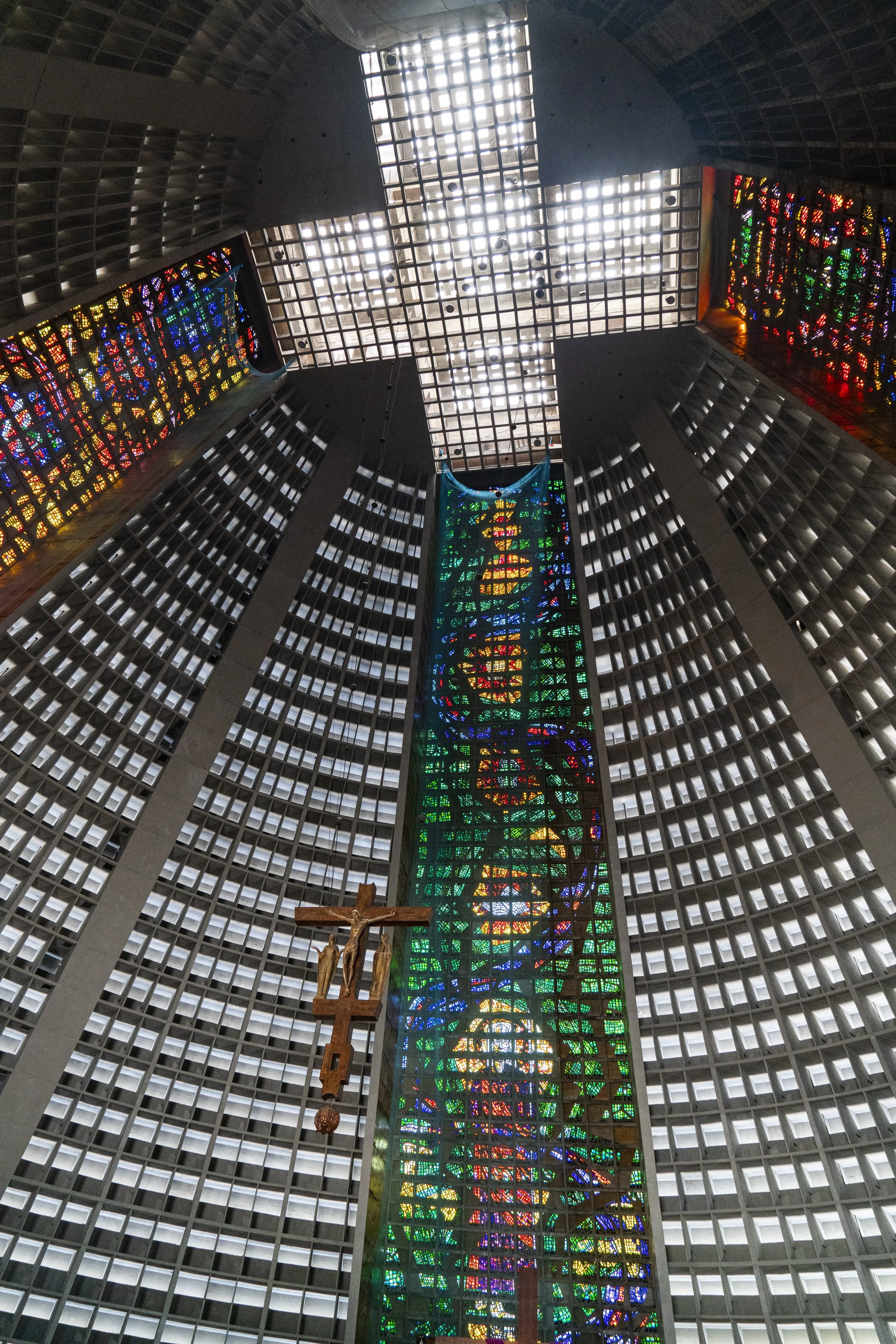
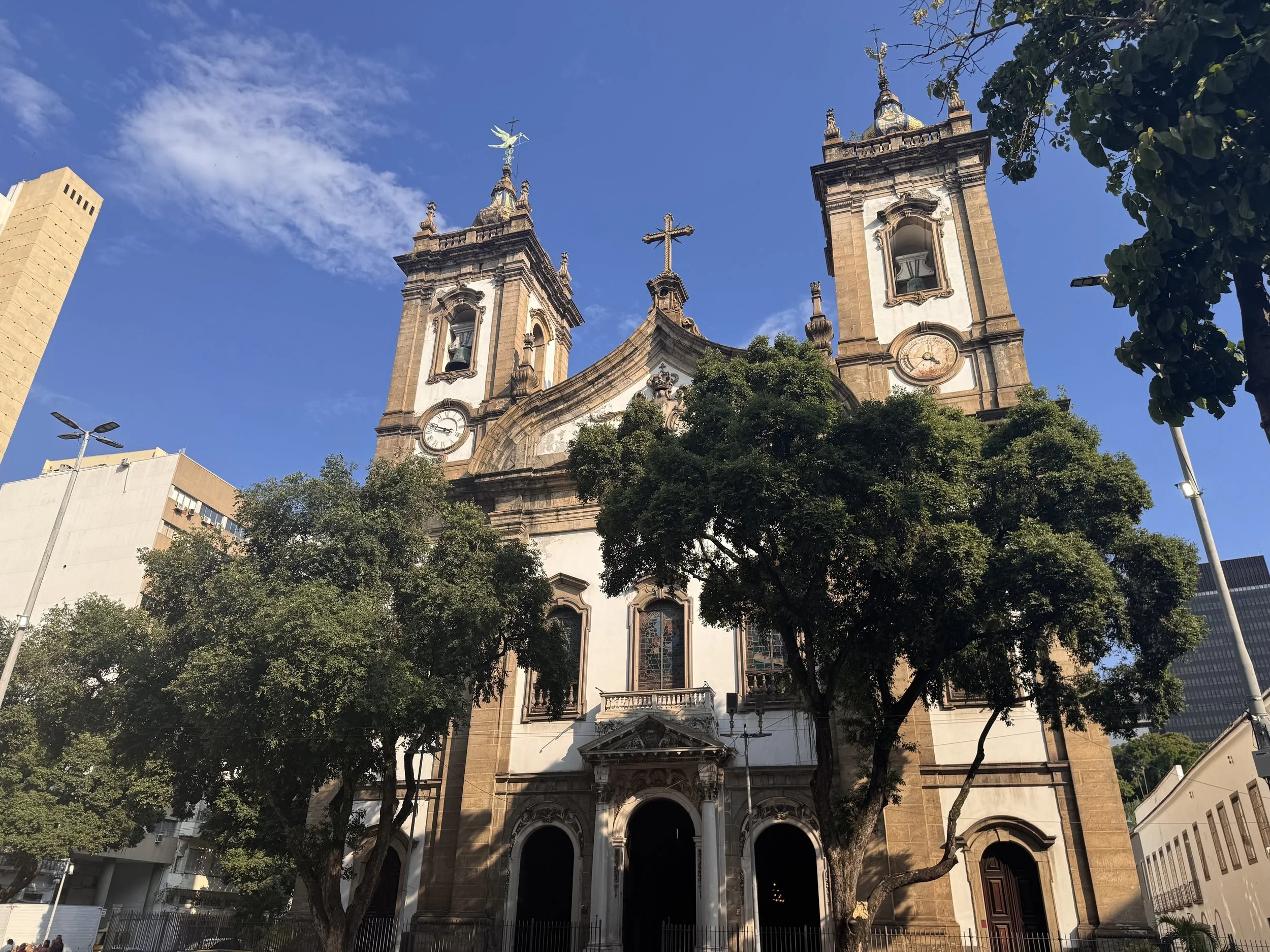
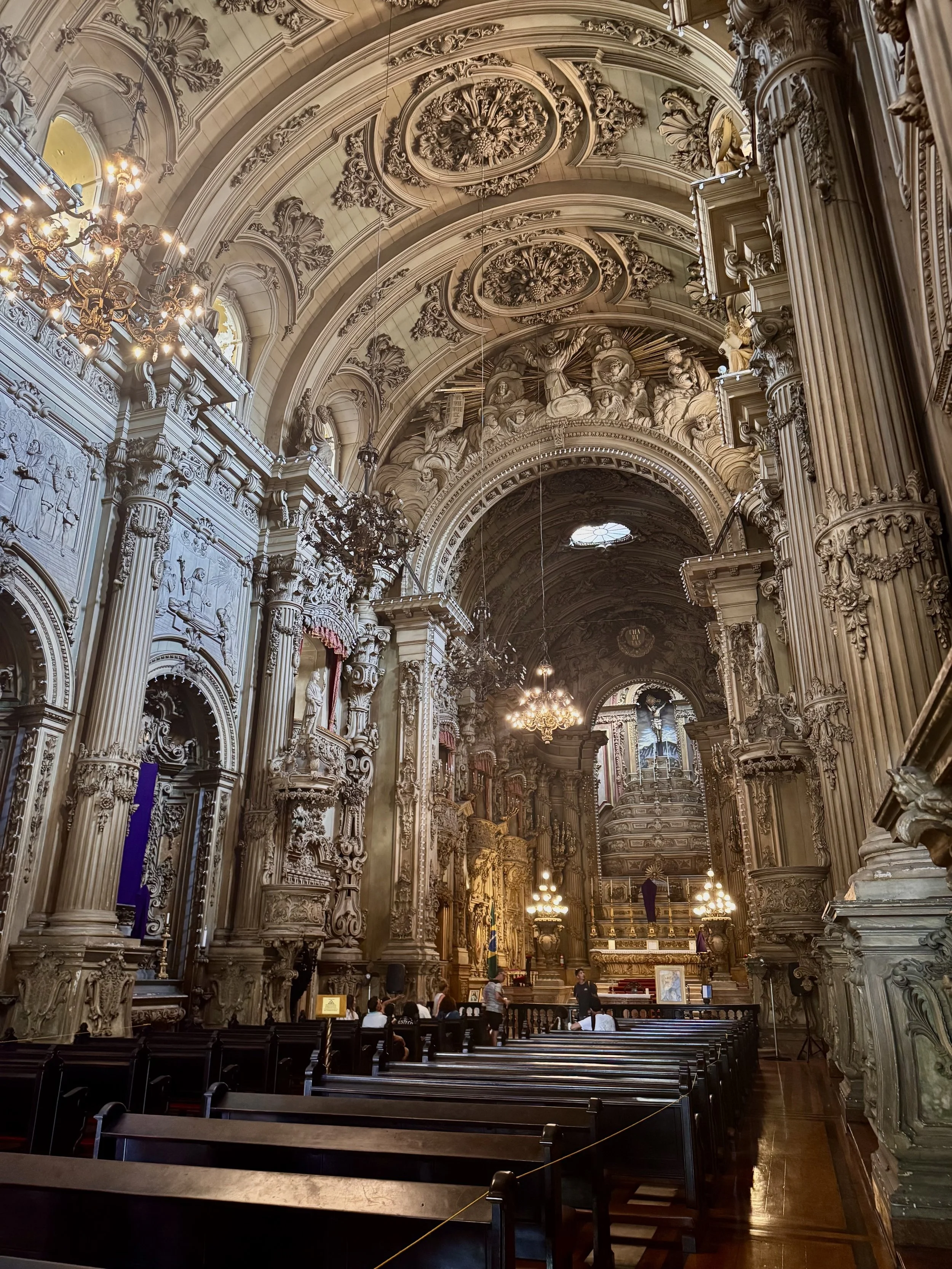
From the steps, we made our way over to the Metropolitan Cathedral. I was starting to overheat and get woozy, so I was eager for some respite from the sun. This Catholic cathedral was unlike anything I’d ever seen. Built in the 60s and 70s, its modern design was based on the Mayan architectural style of pyramids. From the outside, the cone-shaped dome had a kind of brutalist aesthetic, but we enjoyed the soaring panels of stain glass and wandering around the expansive (and mercifully cool!) interior.
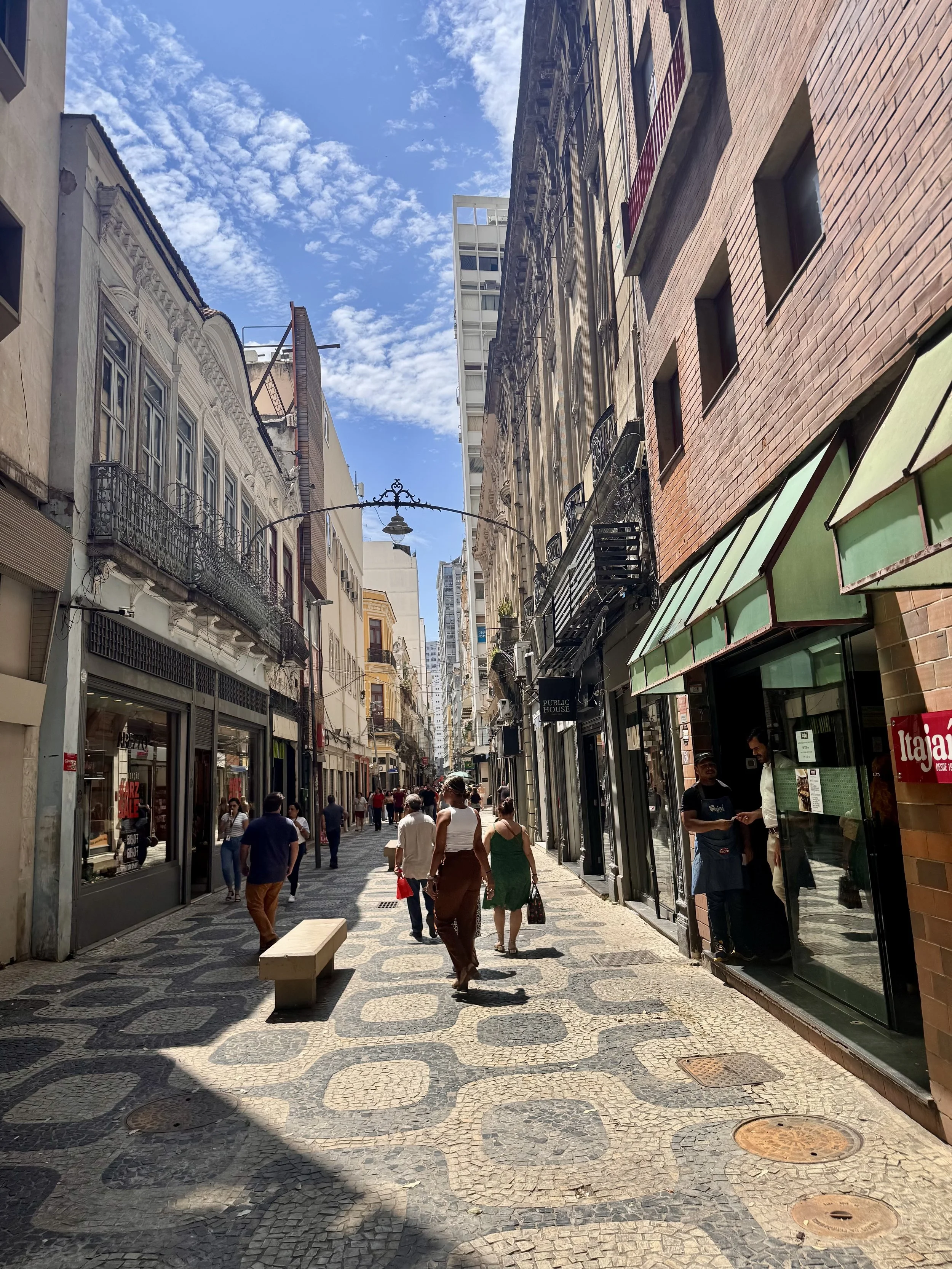
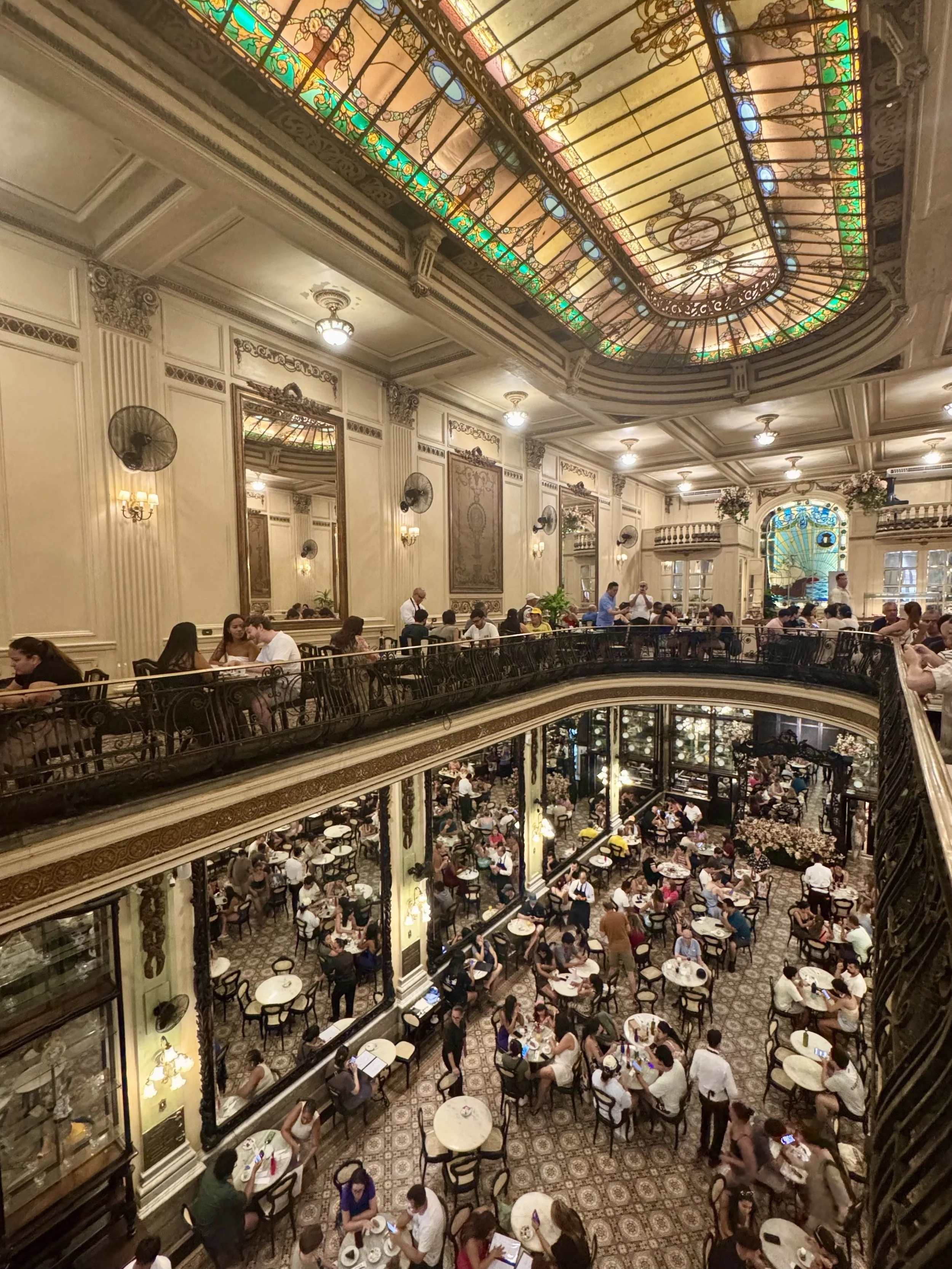
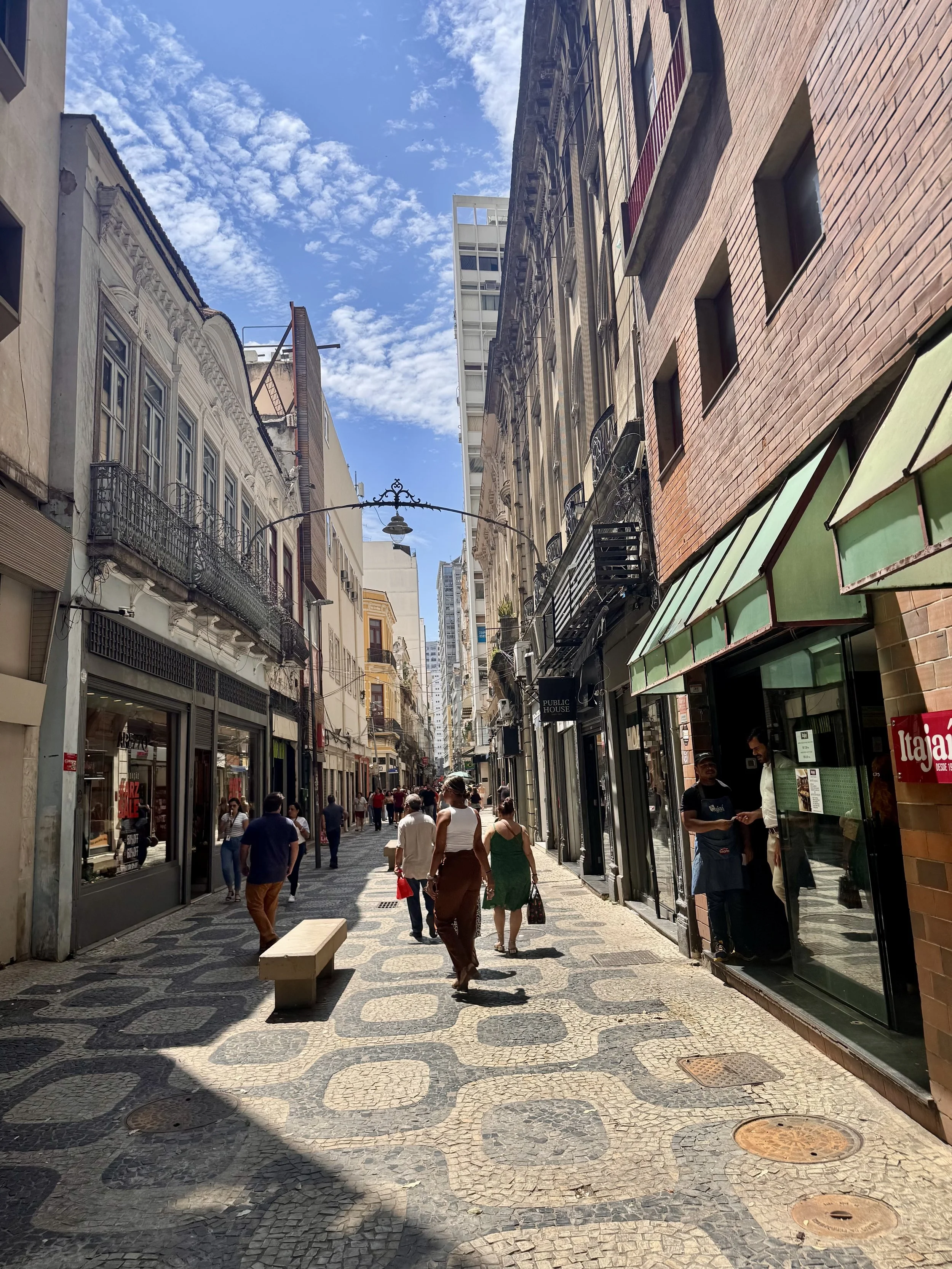
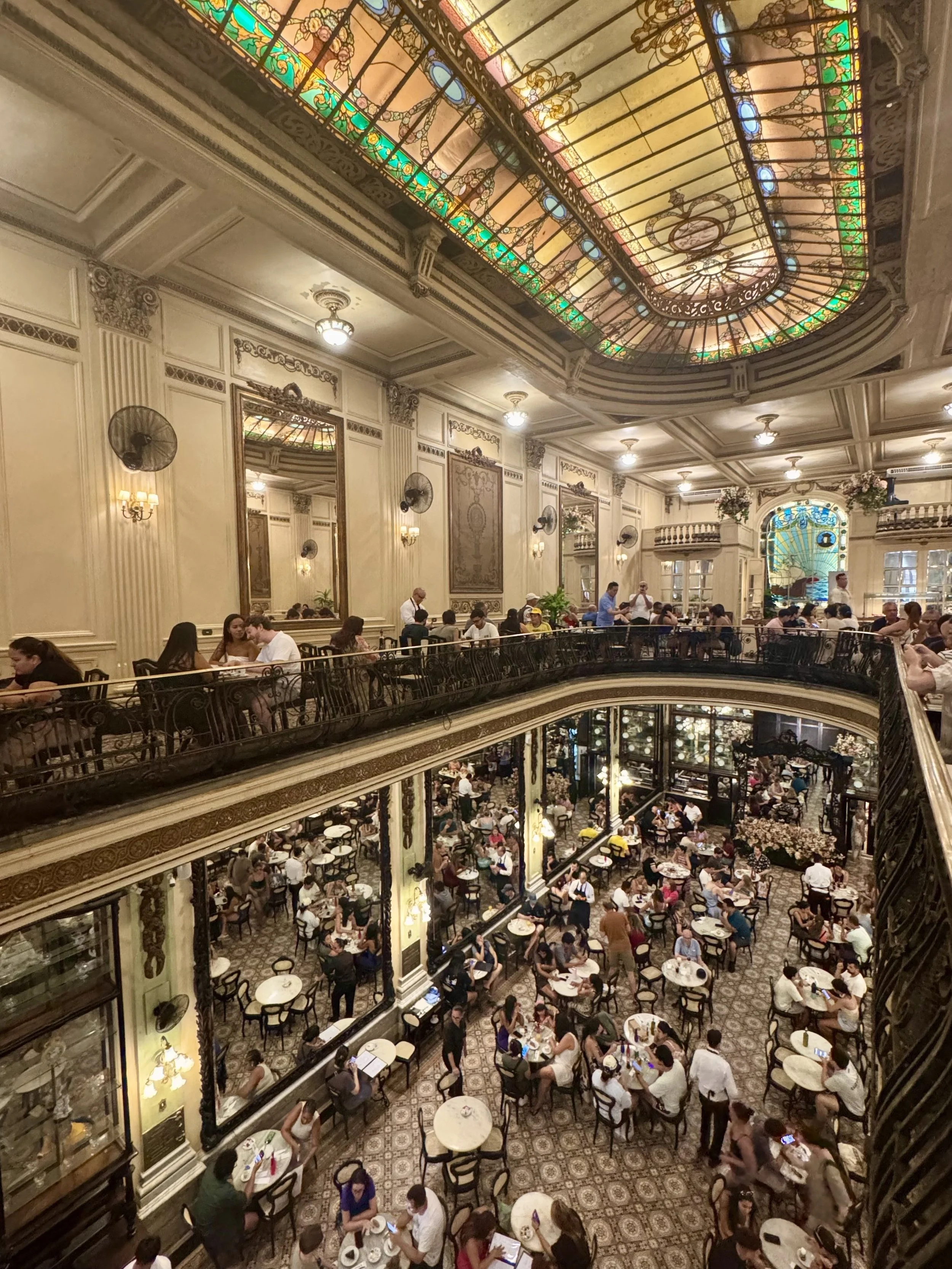
Dave had declared that on our first day in Rio we would need to visit Confeitaria Colombo, a beautiful belle époque cafe, only a short walk from the cathedral. Situated on a pedestrian street that could have been plucked straight out of Lisbon, there was, unsurprisingly, a line to get in. We waited patiently to enter the cafe, ride the antiquated, 3-person elevator up to the 2nd floor, and for our table. While the food was somewhat disappointing, the cafe itself was gorgeous.
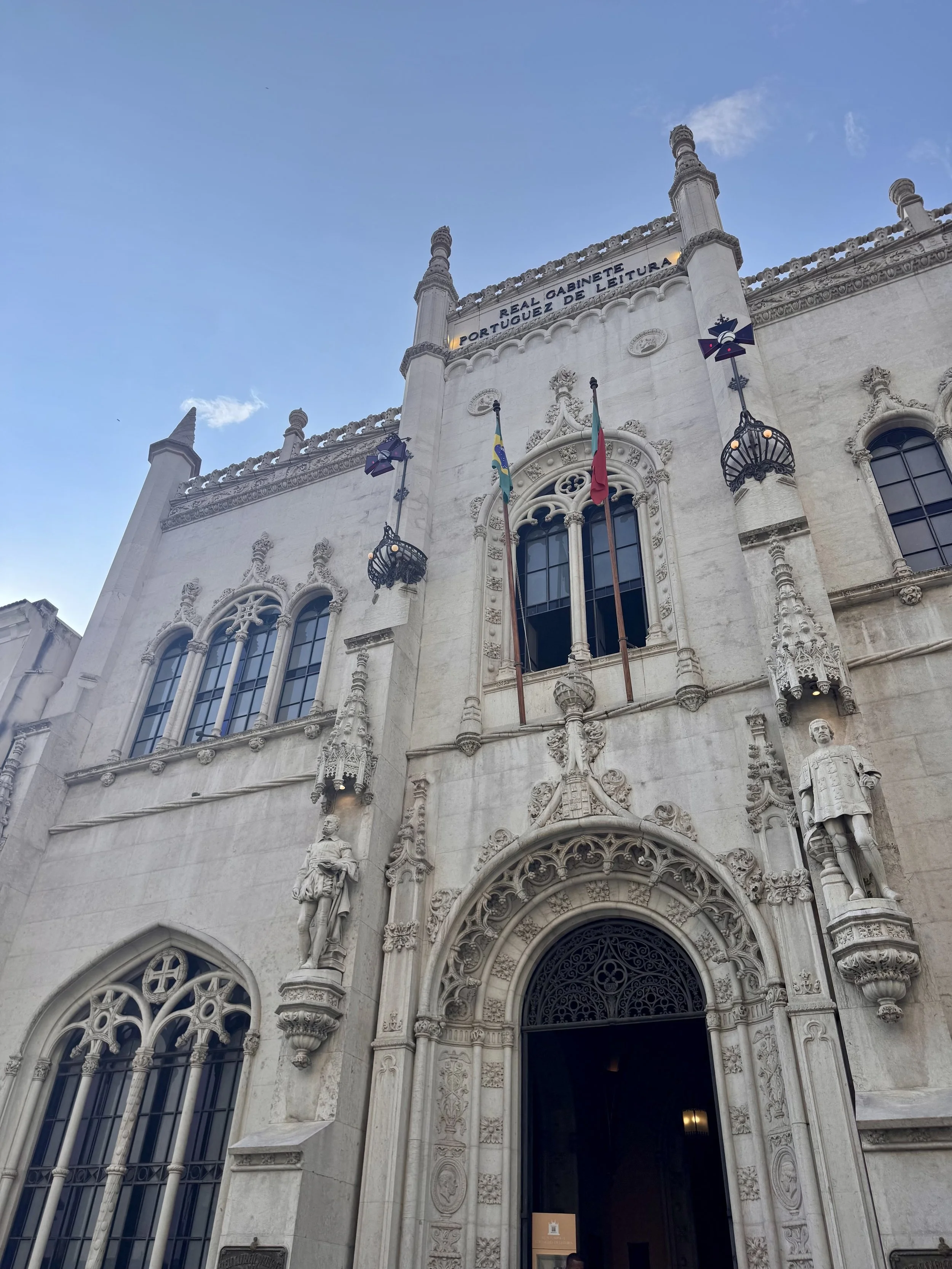
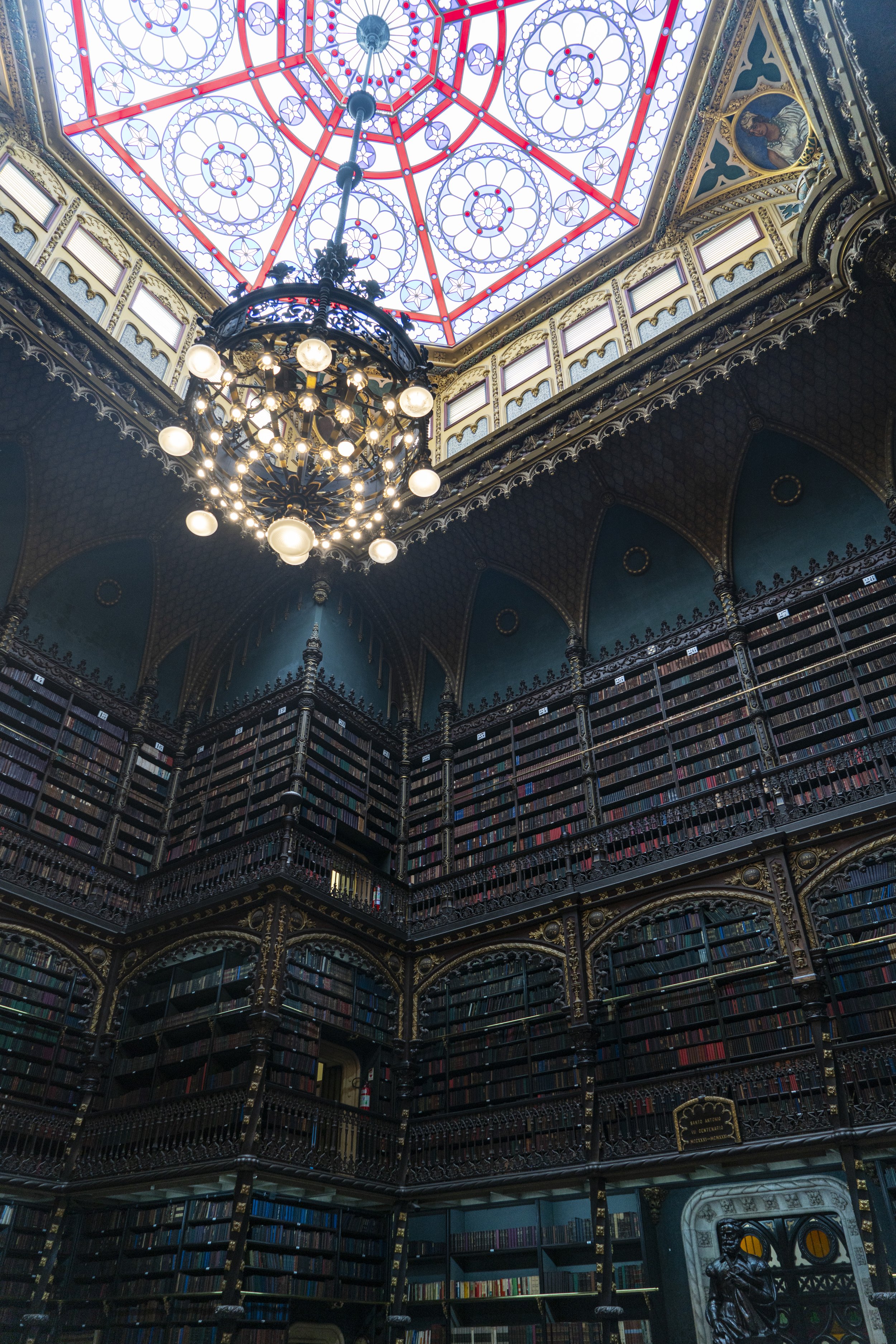
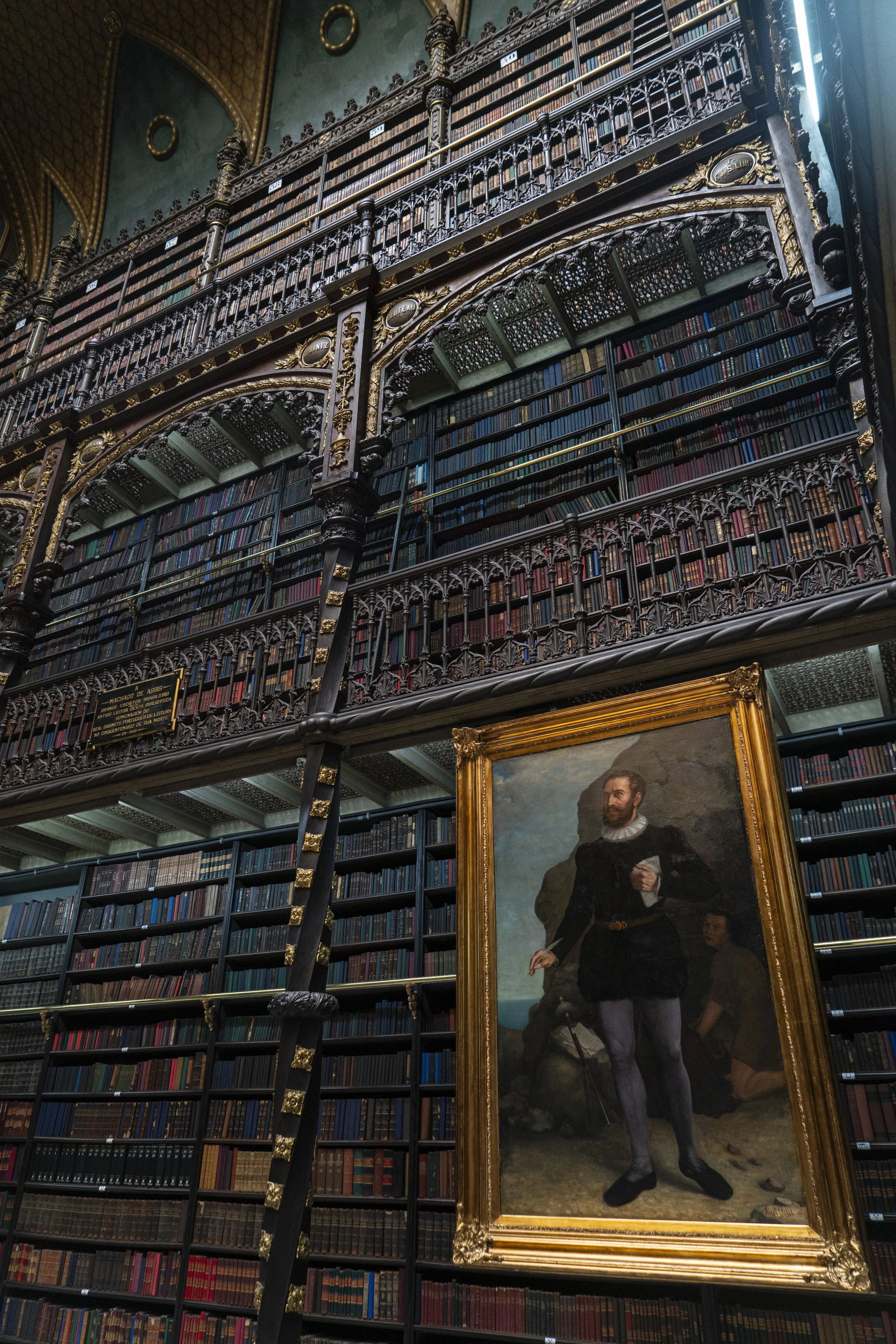
We rounded out our day in the city centre by stopping at the Royal Portuguese Cabinet of Reading. Named the 4th most beautiful library in the world, it houses the largest collection of Portuguese literature outside of Portugal. The line to get in went down the block but thankfully it moved quickly, and we were soon marvelling at the gorgeous reading room, complete with stained glass dome. I appreciate that much like churches, a hushed reverence comes over the throngs of people moving through, remembering their library etiquette.

All in all, we had a full experience in Rio de Janeiro—from its expansive beaches and scantily clad beachgoers, its lively atmosphere and colour, to its petty crime and injury-inducing waves. Quite the way to kick off our two-week sojourn in South America!